
by Erich Rumson ’28 on October 1, 2026
News - National & Global
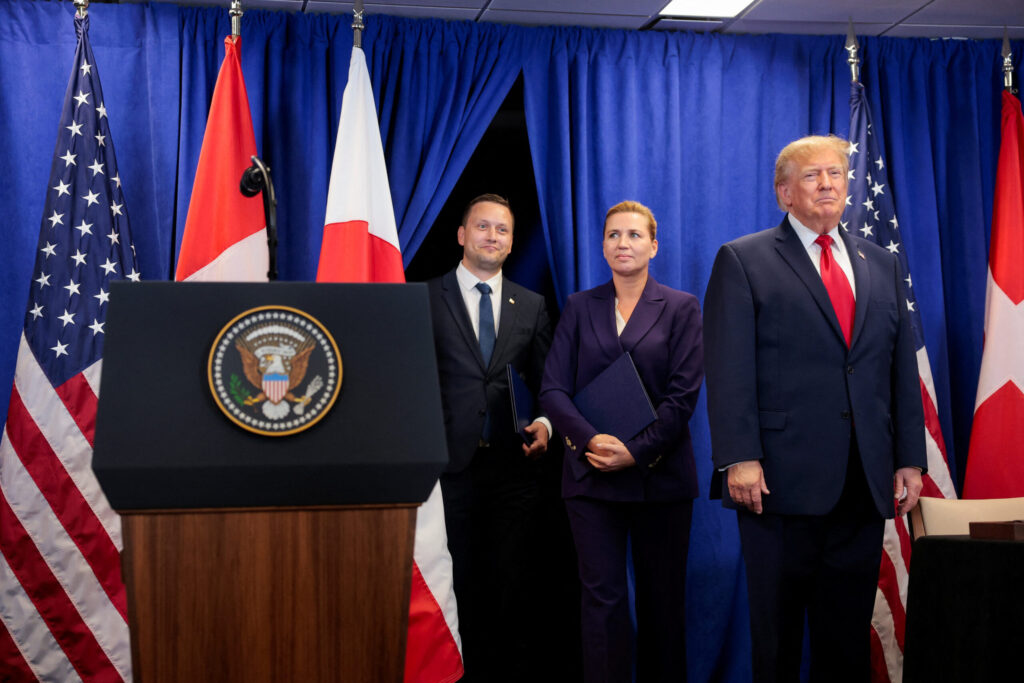
Last Tuesday, Sept. 22, President Donald Trump, along with leaders of Denmark and Greenland, signed a deal at the United Nations General Assembly in New York approving an increased U.S. military presence over the vast island in the North Atlantic. The deal also re-affirms Danish sovereignty over Greenland and acknowledges America’s important role in helping provide its security. The deal serves as a compromise following a long and heated dispute between the president and European allies over the island’s future, with Trump having openly stated throughout his second term his wish to make Greenland a U.S. territory.
Greenland, which has long been a territory of Denmark, is considered the world’s largest island, while also being one of the most sparsely populated, having under 56,000 people. Mostly covered in ice, only the southern parts of the territory are populated, and it has a fairly small economy, primarily centered on fishing. However, Greenland has long been seen as a strategic location for military bases, given its important position between North America and Europe. According to the BBC, the island’s location makes it an ideal spot for missile detection and monitoring vessels in the North Atlantic. Accordingly, the U.S. has maintained a military presence there since World War II. In a 1951 treaty, Denmark gave the U.S. military a lot of leeway in operating in the territory, and the American military presence there reached a peak during the Cold War. In more recent decades, the number of U.S. military personnel in Greenland has decreased, though Trump has sought to reverse this in his second term. Arguing that the island is crucial for U.S. defense against adversaries like Russia and China, Trump tried to pressure Denmark to give the U.S. possession of the island earlier this year, sparking a major controversy. Denmark refused any American offers to acquire Greenland, and polls taken in the territory show widespread opposition to U.S. control.
The deal signed last week serves as a halfway measure, reasserting both the need for a U.S. military presence to provide security and the island’s status as a Danish territory. It names two locations, Narsarsuaq and Mestersvig, as sites for future U.S. military bases. It also allows for the future construction of Trump’s proposed Golden Dome missile shield system, designed to protect the U.S. homeland from missile attacks. Along with giving broader permission for military installations, the deal also continues a practice of prohibiting non-NATO aligned countries from establishing any sort of military presence or financial influence on the island, while also outlining a joint American-Danish effort to prevent espionage from NATO adversaries. These measures are designed to address President Trump’s concerns over China and Russia gaining access to the island, which could undermine NATO security. The deal also has no end date, and would remain in place even if Greenland were to vote for independence from Denmark.
In his speech at the U.N. General Assembly last week, Trump discussed the deal, calling it an “unprecedented agreement, regarding… the large and strategically vital piece of land known as Greenland.” Going further, he said, “This agreement with the Kingdom of Denmark, incredible, beautiful country, and the Greenland people itself, gives the United States permanent control over security and all other needs of that territory.” According to the Wall Street Journal, the deal could pave the way for increased American investment on the island, which some Greenlanders hope could help grow its small economy, still very reliant on Danish subsidies. Regardless of its potential economic impacts, however, the deal could be a hopeful sign of improved relations between America and NATO allies like Denmark, which had been strained over the Greenland dispute.