
Tag: NBA
Providence College Investigates: NBA
by The Cowl Editor on September 30, 2021
Uncategorized
Should the NBA Logo Be Changed?
Will Murphy ’23
Sports Staff
Yes, There’s A Better Choice
The NBA’s logo is one of the most, if not the most, recognizable logos in the world of professional sports.
The NBA has kept the same logo for upwards of 50 years since it was originally established. The logo famously consists of a silhouette of Jerry West, an NBA All-Star guard for the Los Angeles Lakers throughout the 1960s and early 1970s.
Although the NBA has never publicly acknowledged that West is the logo, it is common knowledge that it is West who is represented in the iconic silhouette. One would think that being the logo of the sport they played professionally is one of the highest honors that could be bestowed upon them.
West has publicly stated that, although he is honored to be depicted in the logo, it also embarrasses him to some extent.
In recent years, West has even gone as far as to advocate for the NBA to change the logo.
The game today is almost unrecognizable from the game that was played in the 1960s; there was not even a three-point line yet when the logo was instituted back in 1969. The NBA deserves a logo that evolves with the game and that can more accurately represent the spirit of today’s game.
Since West’s retirement in 1974, there have been countless players who have made a profound impact on the NBA, providing a wealth of options to choose from. Michael Jordan, Kareem Abdul-Jabbar, and LeBron James are just a few of the players who have left a remarkable impact on the NBA.
One player, however, may be even better suited to become the new face of the NBA: Kobe Bryant.
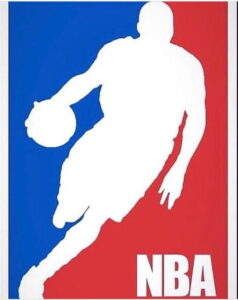
Bryant played for the Los Angeles Lakers for the duration of his 20-year career in the NBA. Throughout his career he racked up countless individual accolades, including 18 All-Star appearances, one Most Valuable Player award, and two years spent atop the league’s scoring leaderboard.
In addition to his individual accomplishments, he also led one of the most successful dynasties the league has ever seen to five NBA championships. Bryant has had one of the most storied NBA careers in the history of the league.
Bryant embodied the loyalty of a true star, remaining with the Lakers for his entire playing career. In every aspect of the game, Bryant’s hardworking nature was evident, which allowed him to gain the respect of opponents and become a fan favorite around the league.
Unfortunately, Bryant died in a tragic helicopter accident on Jan. 26, 2020. What better way to honor Bryant than to reward all the work he put into the league by memorializing his trademark fadeaway as the new NBA logo?
Joseph Quirk ’23
Sports Staff
No, Keep It the Same
There is no good reason, be it social or economic, that the NBA should change their logo.
The narrative that the NBA should consider this change really began to pick up steam in the past year since the passing of NBA legend Kobe Bryant.
Prior to Kobe’s death, the discourse around altering the logo was not present, or at least it was not nearly as prominent as it is now.
I agree that Kobe should be immortalized; his behavior on and off the court as well as his impact on the sport will be forever remembered by fans and the league; however, changing a logo is a big deal for a couple of reasons.
Firstly, the NBA logo has been a symbol of the league for a number of decades. The NBA as we know it today is still relatively young and the game never really exploded in popularity until the 1980s.
Jerry West is the figure on the league’s current logo. He has been one of the best guards in league history, one of the best talent evaluators in league history, and the face of the Los Angeles Lakers organization before the “Showtime” Lakers of the 80’s.
Needless to say, he is an iconic NBA player and an integral part of league history. The man nicknamed “The Logo” has represented the league for years.
The current logo is everywhere: on NBA video games, apparel, hats—that is to say, if you own or watch something NBA-based, you recognize it as the NBA.
If you change that, not only do you outdate all of those broadcasts and merchandise, but you have to pay to replace it all. You also confuse everyone who has for years associated that specific image with the league. The fans may not easily recognize the new logo. Those are just a couple of good reasons that the logo shouldn’t be changed.
All in all, there is no justifiable reason for the NBA to change its logo.
There is no controversy around it, and it hasn’t become outdated or the cause of outrage. The logo, an established visual of the league, doesn’t have to be changed.
The NFL hasn’t changed theirs in the last couple decades. Neither has the MLB or NHL, and all of those leagues, you could argue, have worse logos than the NBA.
Why change a piece of the league’s history, a change that may not help the expansion of the league to fans and could cost the league extensively financially for absolutely no good reason?
No, the league should certainly not change their logo.
PCI: Picking the NBA All-Star Game Starters
by on February 11, 2021
Sports
The Eastern Conference
By Cam Smith ’21
Sports Co-Editor
While the status of the actual NBA All-Star Game hangs in the balance due to the COVID-19 pandemic, the selection process must still go on. Five starters are chosen from each conference: two guards and three frontcourt players. From the East, the guards should be Bradley Beal and Jaylen Brown. Meanwhile, the frontcourt should feature Joel Embiid, Giannis Antetokounmpo, and Kevin Durant.
Even though Beal is the only player on this list who currently does not reside on a playoff team, his selection should be without question. Beal currently leads the NBA in scoring with a stunning 33.3 points per game. In his first 17 games, Beal scored at least 25 points in each one, passing Michael Jordan to set a new NBA record.
Brown, on the other hand, may be a more controversial selection, as some might prefer to choose either of the Brooklyn Nets star guards, Kyrie Irving or James Harden. While either would be a fair pick, Brown’s sensational season for the Boston Celtics is hard to ignore. The high-flying guard is currently averaging 26.4 points, an over six-point increase from last year. He has also mastered the mid-range shot, averaging an impressive 56.8 percent on mid-range jumpers.
Moving to the frontcourt, one must select Embiid. The dominant center is putting up MVP numbers, averaging 29.1 points and 10.8 rebounds to start the season. He has also propelled the Philadelphia 76ers to the top of the Eastern Conference standings.
Right behind the 76ers is the Milwaukee Bucks, led by the astounding Antetokounmpo. The Greek Freak is putting up his usual impressive numbers, averaging 27.3 points and 11.2 rebounds. Although it took a little while for Antetokounmpo to adjust to the Bucks’ new offense, he has found his stride in recent weeks. A recent showing against the Indiana Pacers saw him notch his third triple-double on the season in the Bucks’ 20-point victory.
Finally, the last spot in the East’s starting lineup should go to Durant. Although Durant’s numbers are tremendous as usual, this was a difficult selection to make considering the season that Celtics’ star Jayson Tatum is having. In the end, it comes down to the numbers, as Durant holds about a two-point advantage in the points column while averaging about an assist more per game. Much should also be said about Durant’s remarkable return, as the star has picked up right where he left off despite missing all of last season due to a torn Achilles.
In a pandemic-ridden season, all five of the selected players have stood out as incredible performers. Beyond their potential selections to the All-Star team, each will continue to jockey with one another in a riveting battle for victory in the East.
The Western Conference

By Cam Smith ’21
Sports Co-Editor
Over in the West, the selections are a little easier thanks to some remarkable numbers being put up by the Conference’s best. Indeed, in the West, the guards should be Stephen Curry and Damian Lillard. The towering trio in the frontcourt should be none other than Nikola Jokic, Lebron James, and Kawhi Leonard.
Curry came into the season trying to navigate a new-look Golden State Warriors roster that was thrown into turmoil after his superstar backcourt mate Klay Thompson tore his Achilles shortly before the start of the season. While the pieces around him have often struggled, Curry has thrown the team on his back. The prolific scorer has done what he does best: score. Curry is currently averaging 29.5 points per game, due in part to his impressive numbers from behind the three-point and free-throw lines. He also leads the league in total points with 709.
Curry’s proposed backcourt partner in the West, Lillard, has faced eerily similar circumstances. He, too, is currently operating without his star shooting guard, CJ McCollum, who fractured his left foot in January. And again, like Curry, Lillard has dragged the hobbled Portland Trail Blazers to the current six-seed in the West. He is putting up 29.1 points per game to go along with an impressive 7.3 assists per outing.
As for the frontcourt, it is impossible not to start with Denver Nuggets star center, Nikola Jokic. The Serbian superstar is the likely frontrunner for MVP, averaging a near triple-double with 27.5 points, 11.5 rebounds, and 8.5 assists. He has had no shortage of remarkable outings. On Feb. 6, Jokic put up a casual 50 points, 12 assists, and eight rebounds in a loss to the Sacramento Kings. The next highest scorer on the Nuggets had 14.
The Los Angeles Lakers’ Lebron James, of course, is an inevitable selection. He holds the record for most consecutive games played with 16 All-Star appearances in a row, all 16 of them being starts. However, James is not simply making the team due to past performance. In his 18th season, the potential greatest player of all time is putting up 25.6 points per game, in addition to averaging eight rebounds and eight assists.
Finally, the last spot in the starting five goes to Kawhi Leonard. Perhaps the best two-way player in the league, Leonard has kept the Los Angeles Clippers near the top of the standings in the West, even as the team around him has battled injuries. He is averaging 26 points per game while also adding 1.8 steals per contest.
As in the East, each of these players will see much of one another in the future as they represent their teams in both the All-Star Game and in the NBA Western Conference playoffs.
PCI: WHO WAS THE BEST PLAYER IN THE NBA BUBBLE?
by The Cowl Editor on September 17, 2020
Sports
Devin Booker
by Joseph Quirk ’23
Sports Staff
The NBA bubble is a unique circumstance which the league has never seen before. With a high demand for the return of sports, it also provided a big stage for a lot of players to break out and establish themselves as dominant forces. No one took advantage of this opportunity more than Devin Booker.
In the 2015 NBA draft, the Phoenix Suns selected Booker, a freshman at the University of Kentucky, with the No. 13 overall pick. This selection has turned out to be one of the smartest decisions in the history of the Phoenix Suns. Over his career, the 23-year-old shooting guard has averaged 22.5 points and 4.7 assists per game, while shooting 44.8 percent from the field and 35.4 percent from three. Booker also scored 70 points in a game against the Boston Celtics, making it the 11th game in NBA history where a single player scored 70 points or more in one game. He is one of only six players to do so and the most recent since the late Kobe Bryant.
At the end of an abysmal 2018 season, Booker famously stated, “I’m done with not making the playoffs.” Unfortunately, Phoenix missed the playoffs in 2019 and 2020 as well. However, this season felt different. Booker had a career year, with averages of 26.6 points, 6.5 assists, and 4.2 rebounds per game on shooting percentages of 48.9 percent from the field and 35.4 percent from three. Booker had one of his more efficient seasons as well, mainly because he could play off the ball more with the addition of point guard Ricky Rubio. He also had advanced floor-spacers in Kelly Oubre, Jr. and rookie Cameron Johnson, and strong bigs in Deandre Ayton and Dario Saric.
Indeed, the Suns were winning games and in striking distance of a playoff spot. When the bubble teams were announced, the Suns made the cut and made the best of their opportunity. Booker averaged 31 points, six assists, and five rebounds on efficient shooting splits while earning an All-Bubble First Team nod. He would lead the Suns to the only 8-0 record in the bubble. The stretch included wins over talented playoff teams like the Dallas Mavericks, Los Angeles Clippers, and Indiana Pacers.
All in all, Booker has put in a superhuman effort, elevating both his individual game and his team’s overall performance. The only reason the Suns missed the playoffs was because the Portland Trail Blazers, the team just ahead of them, won a game on a last second missed buzzer-beater.
Certainly, an argument can be made for other players to be named bubble MVP such as T.J. Warren and Damien Lillard, but Booker took the Suns to a new, unexpected level. He showed up when it mattered and beat some of the NBA’s best teams, which is why he should have earned MVP.
Damian Lillard
by Leo Hainline ’22
Sports Staff
The conclusion of the NBA regular season saw some breakout performances from players such as Devin Booker, T.J. Warren, and Michael Porter Jr. The playoffs have also brought some iconic performances, including Luka Doncic’s game-winner against the Los Angeles Clippers and Donovan Mitchell’s 57-point game against the Denver Nuggets. Any of these players are worthy of being considered the bubble’s best player, but the NBA got it right when they gave the award to the Portland Trail Blazers’ Damian Lillard at the end of the regular season.
Even though the Trail Blazers were eliminated from the playoffs in the first round, Lillard’s performances reigned supreme and were the best in the bubble. In Orlando, Lillard averaged 33 points, eight assists, and 4.8 rebounds. Most importantly, he was able to lead his team into the eighth seed after entering the bubble 3.5 games out of the final playoff spot.
After missing two key free throws against the Clippers in their fifth game, Lillard not only stepped up his game, but became the best player in the league. Needing to win out to have any chance at making the 8/9 seed play-in game, the Oakland native dropped 51 and 61 points in his next two contests. Lillard channeled one of his many nicknames, “Logo Lillard,” as his shooting became automatic from everywhere on the court.
He came up clutch against the Dallas Mavericks in his 61-point game, hitting an insane high-bouncing three-pointer to bring Portland level in the closing moments and then seized the victory with crucial plays on both ends of the court. He followed with scoring 42 points, leading Portland to a crucial come-from-behind one-point win against the Brooklyn Nets to seal their place in the Western Conference play-in game. Lillard then had 31 points and 10 assists against the Memphis Grizzlies to secure Portland’s spot in the playoffs.
Lillard’s most iconic moment came in Game one of the opening round against the top-seeded Lakers. With the game going back and forth all game long, it became “Dame Time” for the last seven minutes of the fourth quarter. Lillard started knocking down contested threes from way downtown. The game began to shift in Portland’s favor when Lillard buried a deep three to tie the game at 87 with five and a half minutes to go. After that happened, Lillard was locked in, and the Blazers never looked back, taking the first game 127-119 over the top-seeded Lakers.
Although the Blazers lost their next four games and got knocked out of the playoffs, Lillard’s performances were incredibly memorable. No individual player on any team made more of an impact than Lillard for the Blazers in the bubble.
Providence College Investigates: Kobe Bryant’s Best Moments
by The Cowl Editor on February 6, 2020
Sports
Bryant’s 81 Points vs. Toronto Raptors & Free-Throws Post-Achilles Tear
by Leo Hainline ’22
Sports Staff
In a 2006 mid-season game that nowadays some star players would consider taking off, the Los Angeles Lakers went up against Chris Bosh and the Toronto Raptors in the Staples Center.
The first quarter was nothing special and Toronto was up early. Kobe Bryant was keeping the Lakers in the game, but the Raptors had a serviceable cushion for most of the first half. Nobody would guess that he would end up dropping the second-most points in a single game in NBA history. At half time, despite Bryant having 26, the Lakers were down 63-49 and looked like they were on pace to drop their third game in a row.
Instead of waiting for his teammates to wake up from their off-night, Bryant took the initiative to elevate his game to the next level.
Down double digits, who else was going to get the Lakers back in the game? Lamar Odom? Bryant knew he was that guy who had to put the team on his back. He missed the first couple of shots of the third quarter but kept shooting and one after the other, his shots started to fall. Scoring three-buckets in a row, Bryant single-handedly cut the lead. Out of a timeout, Bryant got the ball, drove baseline, pulled up, pump-faked twice, got fouled and got the bucket. He was locked in—lay-ups, mid-range, threes, it didn’t matter where Bryant was on the court, he was going to score. With a minute left in the third quarter, Bryant stole the ball and got a fast-break dunk to take the lead and the entire crowd was up on their feet.
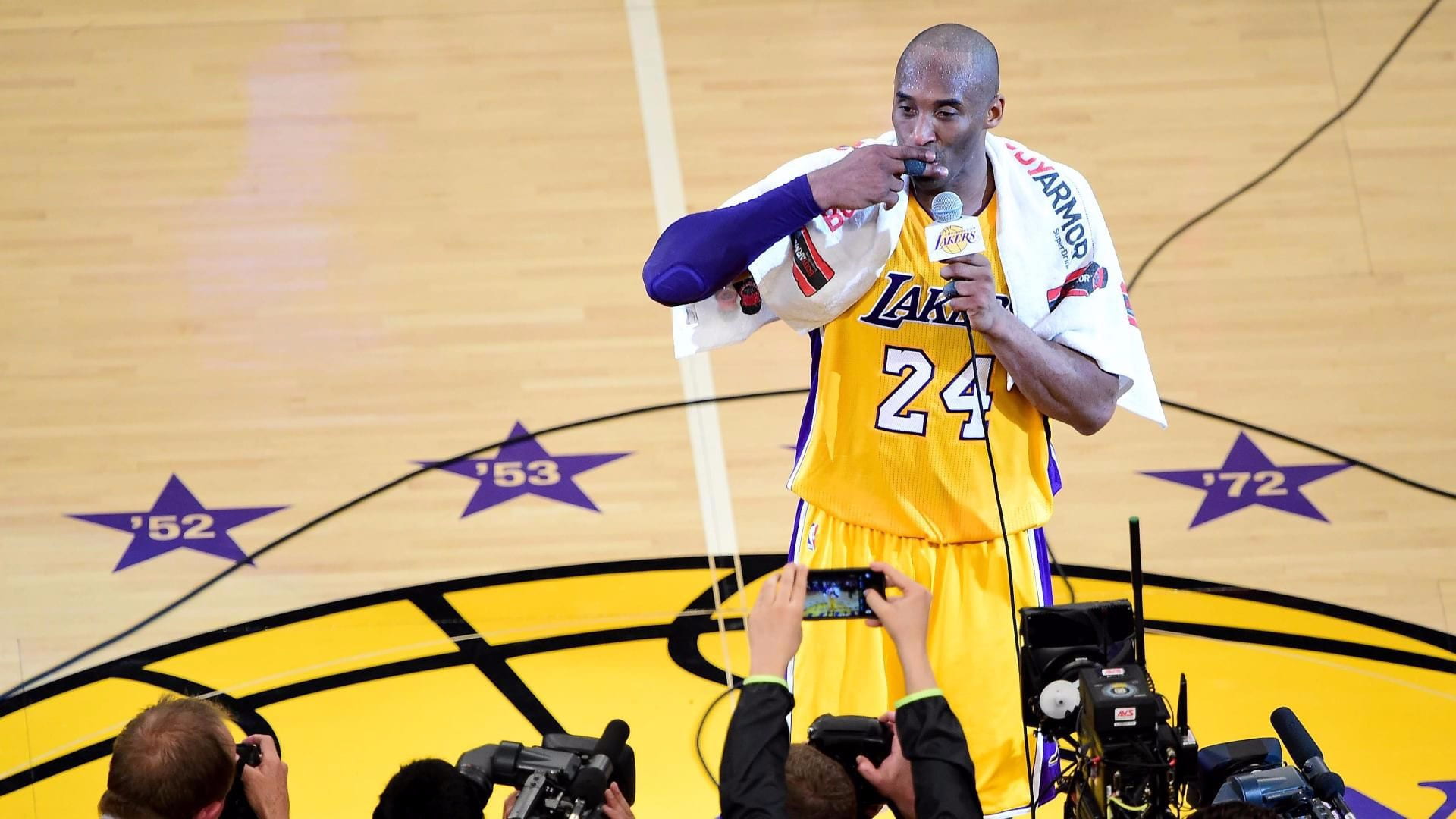
Bryant entered the fourth quarter with 53 points and was just getting started. Bryant kept attacking, driving to the bucket, hitting jump shots, getting to the line. Halfway through the fourth quarter, he got fouled on a three and surpassed his previous career-high of 62. Staples Center was hot—every time Bryant got the ball the people rose out of their seats and started cheering.
At this point, Bryant was pulling up every possession and extending the Lakers lead to close to 20. Everyone in the arena knew that this was one of the best individual performances in the history of basketball. He knocked down his final two free throws to finish with 81, and more important to him, a win for the Lakers.
This game, where one person singlehandedly outscored the opposing team in the second half, is a nice individual memory of Kobe Bryant as a basketball player, but Bryant’s legacy will be remembered for much more than his contributions to the game of basketball, or a single game for that matter. He will be remembered for his energy, hard work, commitment, faith, and love that he spread on a daily basis. The impact he had on his friends, family, and fans is much more significant than a number in the box score.
Another game that displayed Bryant’s tenacity occured seven years later at the end of the 2012-2013 season.
During their 80th game of the season, the Lakers were fighting to secure a playoff spot. The team was playing Bryant heavy minutes for this final stretch of games, trying to make the most of what was a bit of a disappointing season. Some of their new acquisitions did not exactly live up to expectations. Regardless of the situation, Bryant was still leading the team, scoring over 27 points a game and contributing on both ends of the court.
The Lakers were in a dogfight with the Golden State Warriors at Staples Center. Bryant was repeatedly banged up in this physical game. In the third quarter, he was down for about a minute after hyperextending his knee but shook it off and continued to play through the pain. Late in the game, Bryant was knocking down threes and doing everything he could to put the Lakers into the lead.
With three minutes to go, the Lakers were down 109-107 and Bryant drove in on Harrison Barnes at the top of the key. He got fouled but immediately went down, grimacing, grabbing his left heel in what appeared to be a non-contact injury. The severity of the injury wasn’t immediately clear—he still had his game face on and limped over to the bench as the Lakers took a timeout.
Once the coverage resumed on TV it was obvious that Bryant was badly injured. Under his own power, he gingerly moved from the team huddle to the foul line, putting no pressure on his left foot. Down by two, Bryant stepped up and knocked down the first free throw.
At this point, you could see the emotion in his eyes—likely not from the pain of the injury but because he knew that he would be out for the game and rest of the season, unable to help his team.
The referee tossed him the ball, and again, Bryant stepped up and calmly hit the free throw. Tying it up late into the fourth quarter in what some considered to be a must-win game on a torn achilles takes much more than pure talent—it’s takes something that’s inherent in Bryant’s Mamba Mentality. The traits that Bryant possessed in his personality and mentality never just purely applied to basketball. They apply to life, and that is partly why Bryant is respected and beloved by so many people.
The determination he had to fight through the pain and knock down those shots in this single situation is representative of the tenacity he brought on a daily basis, both in basketball and outside the game.
Bryant’s Final Career Home Game & Winning Game Seven of the 2010 NBA Finals
by Sullivan Burgess ’20
Sports Staff
Before the 2015-2016 NBA season, Kobe Bryant announced that it would be his last season after missing the majority of the previous two seasons due to injury. Immediately fans began to purchase tickets to get the chance to see one of the greatest players of all-time one more time. Bryant’s farewell tour was made with applause from other team’s fans, jersey swaps with a player from every team, and retirement gifts. With each passing game, anticipation rose for the regular season finale on April 13 at the Staples Center against the Utah Jazz. The Los Angeles Lakers came into the game 16-65 and had been long out of playoff-contention, meaning this was going to be Bryant’s final appearance.
Every former Laker and celebrity that you can possibly think of were in attendance to watch the Black Mamba play in his last ever NBA game. Bryant, the final player left from the 1996 NBA draft, was ready to put on a show one last time and let everyone know, including his daughters and wife, that he was not going to go out quietly.
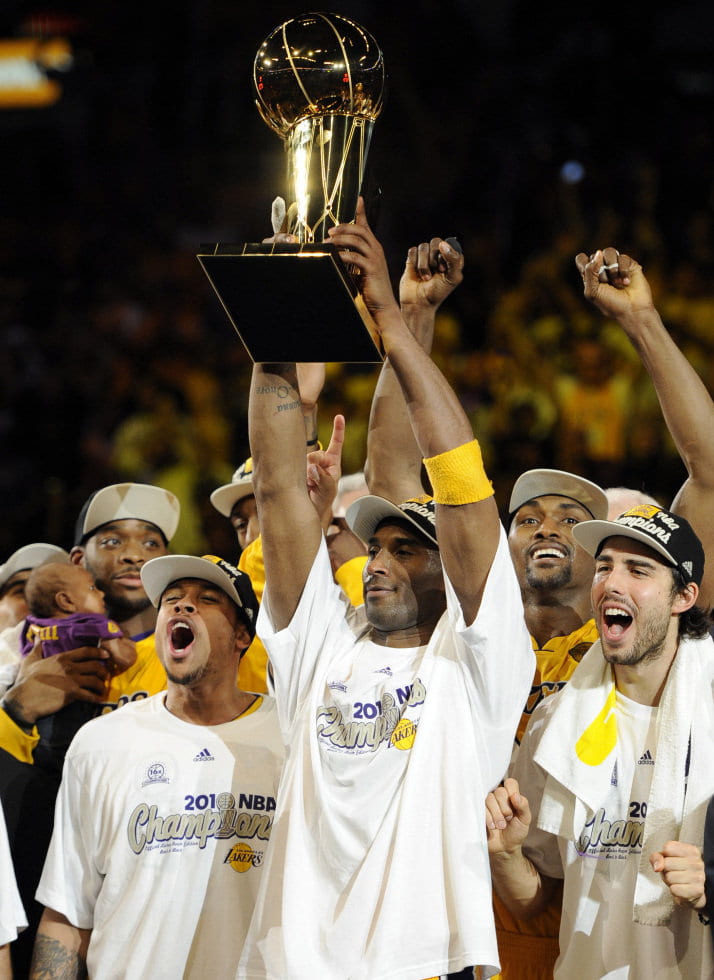
During the season, Bryant averaged 17.6 points per game in 66 games. Expectations were high that Bryant was due for something special, and special was just an understatement of what happened on that night. After being down by 15 at halftime, Bryant put the Lakers on his back one final time and gave one last memorable game. After scoring 22 points at halftime, Bryant exploded for 42 points in the second half to finish with 60 in his final game.
In the final minute with his team down 95-96, Bryant hit a mid-range jump shot to give the Lakers the lead 97-96. He would seal the game with 15 seconds left by hitting two free throws to make it 99-96. The Lakers gave Bryant the chance for one final curtain call by subbing him out with four seconds left to a standing ovation by the home crowd. Bryant gave the crowd one last salute before walking off the floor forever and leaving everyone with a moment they will not forget.
The other moment that will forever define Bryant’s legacy is when the Los Angeles Lakers faced the Boston Celtics in Game Seven of the 2010 NBA Finals. The two teams also met in 2008 when the Celtics took the series in six games. Boston was looking for their second title with their Big Three. Meanwhile, Bryant was ready to bring LA back-to-back championships and win his fifth overall. Going into Game Six Boston held at 3-2 advantage in the series with two chances to take the series. The Lakers made sure there would be a Game Seven after beating down on the Celtics 89-67. Bryant scored 26 points and grabbed 11 rebounds as the Lakers forced a Game Seven on their home court.
While Boston held the lead after three quarters with the title close in their sights, Bryant was going to make sure his team did not go out quietly. After averaging 27 points during season, Bryant scored a game-high 23 points, including 10 in the fourth quarter in a tight battle with the Celtics. The Lakers pulled ahead late in the game pulled out the 83-79 win. The series gave Bryant his fifth ring and second Finals MVP award. He averaged 28.6 points per game during the series and shot 40.5 percent from the field.
This series helped cement Bryant as an all-time great, putting him one championship behind his idol Michael Jordan. After winning his first three titles with teammate Shaquille O’Neal, Bryant showed that he could lead a team on his own and carry them when needed most.
Kobe Bryant was more than an athlete, he was a leader, MVP, father, and most importantly a legend amongst all the branches of sports. He will be missed and never be forgotten for his actions on the court and the greatness he achieved off the court.
In Memorium: Kobe Bryant
by Meaghan P Cahill on January 30, 2020
Sports
Laker Great Leaves Behind an Unparalleled Legacy
By Cam Smith ’21
Sports Assistant Editor
I was eleven years old as I sat on the couch, eyes glued to the TV on June 16, 2010. The Los Angeles Lakers were in the midst of a dramatic Game Seven against my beloved Boston Celtics, a game that was the perfect finale to a perfect series. Fresh off a victory over the Orlando Magic in the NBA Finals the previous year, Kobe Bryant was looking for his fifth championship overall. He was also firmly set on crushing my dreams.
I still remember the shot that ended it. No, it was not the game-winner, in fact there were still five minutes left on the clock, but for all intents and purposes the game was over.
Bryant took the ball at the top of the key, guarded by the Celtics’ Ray Allen. A quick jab to the left sent Allen reeling, allowing for Bryant to quickly take one dribble to the right. Somehow, almost immediately, the “Black Mamba,” true to his namesake, was in the air hoisting up his patented fade-away jumper.
The ball found nothing but net. As the Staples Center went berserk, I stormed off to my room, frustrated and angry because Bryant had the lead in the fourth quarter of a Game Seven, and there was no way he was going to give it up.
This particular moment perfectly encapsulates what everyone referred to as the “Mamba Mentality:” a mentality of hard-work, grit, and a smooth and unbreakable confidence. These traits, in addition to his basketball prowess, elevated his status to that of a living legend, one celebrated with a retirement tour unlike any other during his final season.
Truly, Bryant just seemed invincible. He had transcended the bounds between sports and pop culture. More than a basketball player, he was a cultural icon that showed that the NBA could thrive post-Michael Jordan.
That is why his death on Sunday in a helicopter crash, along with nine others, including his 13-year-old daughter and fellow basketball savant Gianna Bryant, is so difficult to come to terms with. Bryant was supposed to be around for decades to come, gracing playoff games and award shows much like the legendary Bill Russell does.
Instead, the world got a stark reminder of the fragility of life, an idea made all the more poignant by the passing of fellow passenger and former Cape Cod Baseball League coach John Altobelli. A man who, much like Bryant, devoted his life to the love of the game. Altobelli tragically perished alongside his wife Keri and daughter Alyssa.
In lieu of everything, it bears mentioning that Bryant did not lead a life without controversy. He was accused of sexual assault in Colorado in 2003, although the charges were dropped after his accuser refused to testify. On the court, he often got into spats with his teammates due to his lofty standards, most notably with fellow All-Star Shaquille O’Neal.
Nevertheless, he was the reason so many kids fell in love with the game. If the last generation wanted to be like Mike, then this generation wanted to be like Kobe: a 5-time NBA champion, 18-time NBA All-Star, 2-time Olympic Gold Medalist, and 1-time Academy Award winner.
Bryant was far from perfect, but his commitment to the sport of basketball was unparalleled. So too was his commitment to his children. Indeed, the ill-fated helicopter was en route to Gianna’s travel basketball game, where Bryant was set to coach and Gianna was set to play. Their intended destination makes the untimely passings all the more devastating.
Ten years ago, in Game Seven of the NBA Finals, Kobe broke my heart. On Sunday, my heart broke again: for the Bryant family and for all the lives lost in the tragic accident.

PCI: Should NBA Teams Be Allowed to Rest Their Key Players During Nationally Televised Games?
by The Cowl Editor on December 5, 2019
Sports
Yes
Kawhi Leonard is one of the best players in the NBA. An MVP candidate and finals MVP last season, Leonard was one of the most talked about players in the league, despite his quiet and reserved demeanor. This past offseason, Leonard shocked Canada as well as NBA twitter as he chose to team up with fellow superstar and California native Paul George on the Los Angeles Clippers.
However, Leonard’s success has been marred with controversy. Leonard was traded to the Toronto Raptors last offseason after losing trust with his previous team, the San Antonio Spurs.
He claimed that the Spurs’ medical staff mishandled an injury he sustained during the playoffs that forced him to sit the rest of the playoffs and most of the regular season. To help get Leonard on the court and manage his health, the Raptors and now the Clippers implemented a strategy known as “load management.”
The NBA season is long and tedious, and many players struggle to play all 82 games. While load management was relevant prior to Leonard, he brought it into the spotlight.
This season, the excitement caused by Leonard’s move to Los Angeles has landed the Clippers in numerous primetime games. However, Clippers coach Doc Rivers is less concerned about the fans watching Leonard and more concerned about his star. And rightfully so.
When healthy, Leonard alone can change a series. He is one of the best two-way players in the game. River’s main concern right now is having Leonard available for a tough run through the Western Conference playoffs. That should also be the main concern for Clippers fans. Of course, it is understandable why the NBA would dislike this.
The NBA places teams in nationally televised games because they believe the teams are interesting or good and can attract more fans or get fans of other teams to watch them. These games are meant to pull the biggest audiences and the most ad revenue of any in that week. But if a team’s star player does not play, that obviously hurts their marketability. If the player is able to perform and their reason for being inactive is rest and recovery, the league is upset. But the logic the Clippers employ is valid league wide.
While this is a business, money is still going to be made. People will still watch, and if not, they will in the playoffs. These teams hire coaches and trainers to make the best decisions for the teams to win long term and monitoring the health and well-being of their best players falls into that category.
– Joseph Quirk ’23
Sports Staff
No
Load management in the NBA is defined as balancing the level of playing time in which a player utilizes in the league. This concept is terrible for the future of the NBA.
Load management is just a way to give superstar players a day off in the NBA in order to rest their talents for the playoffs. These superstars are taking off on games that are back-to-back nights throughout the week or even when the team is playing a weaker team.
One big advocate for load management has been NBA champion and small forward for the LA Clippers, Kawhi Leonard. While there is nothing wrong with a player being concerned with his health, which is always the number one focus when playing in a professional sport, there is a time and a place in which players should and should not rest.
If a player knows he is hurt and the doctors order him not to play, then he should not play; however, if he is 100 percent healthy he should be focused on playing. You do not see other elite players such as Giannis Antetokounmpo and Luka Doncic take days off for load management.
Another factor that plays into why load management is unnecessary is that it takes away from the experience of watching the game. Imagine paying a lot of money for a ticket to watch your favorite NBA player live in person, and you do not get to see him that day due to the player wanting to take some time off.
There are plenty of young players willing to play a 82 game season; meanwhile, these all-stars think they are tough and want to take some time off to rest. They need to be there to contribute to the team and help secure wins and chemistry for the ongoing season.
Without the superstars, the NBA is boring to watch and television ratings slip. The league is not doing enough to prevent these load management situations throughout the entire NBA, allowing their players to walk all over the front office.
It is time to put an end to load management once and for all to make sure all players are equally contributing to their teams.
– Sullivan Burgess ’20
Sports Staff
Simpkin ’94 Reflects on Career
by The Cowl Editor on November 21, 2019
Sports
By Liam Tormey ’22
Sports Staff

Last Thursday, the Sports Business Organization at Providence College got the chance to speak with former NBA and PC men’s basketball player, Dickey Simpkins ’94. Simpkins spoke with the group over Skype and discussed his journey from his early childhood to where he is today.
Simpkins, who grew up in Washington D.C., recalled the first time he ever picked up a basketball back in the fourth grade. He said a father of one of his classmates asked him if he wanted to play a basketball game with them that weekend. Simpkins said he went that Saturday with just a pair of shoes, and “ever since then, playing basketball started for me.”
It was a long time until Simpkins realized he was good enough to make it somewhere in basketball. His high school basketball coach told him it was a real possibility, and he said that conversation “turned a switch in my life and I started to do everything to the best of my ability.” He later was invited to an Olympic event where he got the chance to play in front of NBA scouts and he knew getting drafted was a real possibility.
Offers from Duke University, University of Notre Dame, University of Connecticut, and many more were all on the table for Simpkins, but he wanted to play in the Big East Conference or the Atlantic Coast Conference (ACC). Without football at PC, Simpkins knew he could get his name out there.
Simpkins came to PC in 1990 and stayed all four years under head coach Rick Barnes. He said he had an unbelievable experience at PC and even got the chance to win a Big East Championship in 1994 against Georgetown University.
After the ‘94 season, Simpkins entered into the NBA draft and was selected 21st overall in the first round by the Chicago Bulls.
Simpkins remembers the first time he ever met Michael Jordan in the team facility. Simpkins was sleeping in the team facility’s lounge area when Jordan walked by him. He was half-asleep when Jordan came up to him and said, “What’s up, young fellow?” Simpkins said he thought he was dreaming until he fully woke up from his nap and saw Jordan in the locker room.
Simpkins is a three-time NBA Champion and loved his time in the league. He played seven years in the NBA before playing six years overseas. He said it was an “unbelievable experience” to be able to learn about so many different cultures.
After finishing his 13-year playing career, Simpkins wanted to get into the business side of the sports world. He has been in television as a color commentator for college basketball games for 12 years now following his career, has his own basketball development camp called Next Level Performance Inc., and has worked as a scout for both the Charlotte Hornets and currently the Washington Wizards.
Simpkins then took some questions from members of the group. When asked about how to get into the business of the sports world whether that is in broadcasting, the front office, or even as a scout, Simpkins said to “study your craft.” Finding people in the industry who are good at what they do now and replicating their qualities was a tool Simpkins thought would be helpful.
He emphasized how important it is to create and build relationships. During his time at PC, Simpkins created a relationship with current ESPN commentator and former Friar, Doris Burke ‘87. She was the reason Simpkins got his first television job at ESPN and wanted everyone in the club to know how important relationships can be.
Simpkins was really proud to be able to share some tips about his journey to the Sports Business Organization at PC. As an individual who has done so much on and off the basketball court, he was a great speaker to help the club to find ways to get into the sports industry.
Simpkin ’94 Reflects on Career
by The Cowl Editor on November 21, 2019
Sports
By Liam Tormey ’22
Sports Staff
Last Thursday, the Sports Business Organization at Providence College got the chance to speak with former NBA and PC men’s basketball player, Dickey Simpkins ’94. Simpkins spoke with the group over Skype and discussed his journey from his early childhood to where he is today.
Simpkins, who grew up in Washington D.C., recalled the first time he ever picked up a basketball back in the fourth grade. He said a father of one of his classmates asked him if he wanted to play a basketball game with them that weekend. Simpkins said he went that Saturday with just a pair of shoes, and “ever since then, playing basketball started for me.”
It was a long time until Simpkins realized he was good enough to make it somewhere in basketball. His high school basketball coach told him it was a real possibility, and he said that conversation “turned a switch in my life and I started to do everything to the best of my ability.” He later was invited to an Olympic event where he got the chance to play in front of NBA scouts and he knew getting drafted was a real possibility.
Offers from Duke University, University of Notre Dame, University of Connecticut, and many more were all on the table for Simpkins, but he wanted to play in the Big East Conference or the Atlantic Coast Conference (ACC). Without football at PC, Simpkins knew he could get his name out there.
Simpkins came to PC in 1990 and stayed all four years under head coach Rick Barnes. He said he had an unbelievable experience at PC and even got the chance to win a Big East Championship in 1994 against Georgetown University.
After the ‘94 season, Simpkins entered into the NBA draft and was selected 21st overall in the first round by the Chicago Bulls.
Simpkins remembers the first time he ever met Michael Jordan in the team facility. Simpkins was sleeping in the team facility’s lounge area when Jordan walked by him. He was half-asleep when Jordan came up to him and said, “What’s up, young fellow?” Simpkins said he thought he was dreaming until he fully woke up from his nap and saw Jordan in the locker room.
Simpkins is a three-time NBA Champion and loved his time in the league. He played seven years in the NBA before playing six years overseas. He said it was an “unbelievable experience” to be able to learn about so many different cultures.
After finishing his 13-year playing career, Simpkins wanted to get into the business side of the sports world. He has been in television as a color commentator for college basketball games for 12 years now following his career, has his own basketball development camp called Next Level Performance Inc., and has worked as a scout for both the Charlotte Hornets and currently the Washington Wizards.
Simpkins then took some questions from members of the group. When asked about how to get into the business of the sports world whether that is in broadcasting, the front office, or even as a scout, Simpkins said to “study your craft.” Finding people in the industry who are good at what they do now and replicating their qualities was a tool Simpkins thought would be helpful.
He emphasized how important it is to create and build relationships. During his time at PC, Simpkins created a relationship with current ESPN commentator and former Friar, Doris Burke ‘87. She was the reason Simpkins got his first television job at ESPN and wanted everyone in the club to know how important relationships can be.
Simpkins was really proud to be able to share some tips about his journey to the Sports Business Organization at PC. As an individual who has done so much on and off the basketball court, he was a great speaker to help the club to find ways to get into the sports industry.
Editor’s Corner: Money Talks: The NBA & China
by The Cowl Editor on October 31, 2019
Sports
By Cam Smith ’21
Sports Assistant Editor
For months, pro-democracy protesters have filled the streets of Hong Kong, a former British colony that was handed back to the Chinese in 1997. Although taking place on the opposite side of the globe, the effects of the protests are being felt on the American world of basketball.
To understand the unrest, one must understand that since 1997, China and Hong Kong have operated under a “one country, two systems” policy. The policy grants the citizens of Hong Kong far greater access to rights, including the right to free speech and free assembly, than those living on the Communist party-controlled mainland.
The catalyst for the protests was a bill that would make it easy for Beijing officials, including President Xi Jinping, to accuse Hong Kong citizens of fallacious crimes, and then process them through courts controlled by the Communist Party. Although the bill was recently withdrawn by the Hong Kong legislature, the protests have continued as they have evolved into a broader fight against the increasing encroachment of Beijing into everyday life.
It is in this context that on Oct. 4, the general manager of the Houston Rockets, Daryl Morey, tweeted out his support for the protesters, posting an image that read, “fight for freedom, stand with Hong Kong.” This simple gesture of support created countless consequences.
Subsequently forced to apologize for his tweet, Morey was denounced by the Chinese consulate in Houston and was even on the hotseat as the Rockets reportedly considered firing him in an effort to appease the Chinese. His own star player, James Harden, took it upon himself to apologize for Morey, saying, “We apologize… we love China. We love playing there.”
Fellow NBA star, Lebron James, whose team was in China at the time for a pair of preseason games, also weighed in, saying that, “So many people could have been harmed [by the tweet], not only financially, but physically, emotionally, spiritually… Even though yes, we do have freedom of speech, there can be a lot of negative that comes with it.”
Since then, Chinese broadcasters have ignored key games in the opening week of NBA action, including the Rockets opener against the Milwaukee Bucks. Chinese sponsors for the NBA have also been pulled, and those games that did make it to television in China were devoid of audio for fear of mentioning the controversy.
It was only recently that the NBA forged a $1.5 billion agreement to stream games online with Chinese tech giant Tencent Holdings. Prior to the deal, what the league labels as “NBA China,” already held an estimated value of $4 billion to the league. Unquestionably, China represents an enormous market for basketball itself.
However, this does not excuse the NBA from turning its back on a people fighting for freedom. The squashing of support for Hong Kong by the league, along with other American corporations including Apple and Blizzard Entertainment, is deeply disturbing. Furthermore, it is a complete betrayal of the American values that we hold dear as a country, values that have allowed the NBA and its players to thrive. The expansion of capitalism must not result in the sacrifice of democracy.
Editor’s Corner: Crashing Through Gender Barriers
by The Cowl Editor on October 10, 2019
Sports
By Meaghan Cahill ’20
Sports Co-Editor
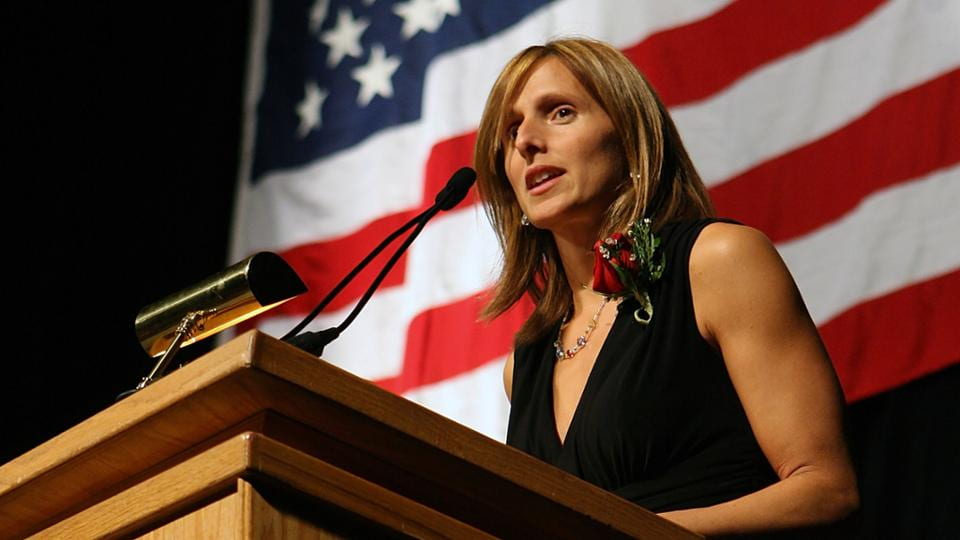
Olympic gold medalist and former Providence College Women’s Hockey Team member Cammi Granato ’93 has been hired by the National Hockey League expansion team based in Seattle as the first female pro scout.
Team general manager Ron Francis said, “I know she’s a female pro scout for us, but her resume is why she got the job—not because she’s female.”
However, there is a lot of importance in the fact that Granato is a female.
As one of the handful of women working in the NHL, Granato’s new position signifies that the NHL is beginning to catch up to current times and solve the gender inequality that has had a daunting hold over professional sports for many years. The only difference between the NHL and other leagues is that the MLB, NBA, and NFL have already made attempts to close the gap between the male-to-female workers ratio.
As of 2018, the MLB has over 100 women working in baseball operations (front office and on-field jobs) and the NBA and NFL have hired woman to take on full-time coaching roles. And while it must be noted that no women has been hired as a full-time general manager or head coach, at least there has been acknowledgement from these three leagues that women are capable of working within both the game and with the athletes.
MLB chief diversity officer Renee Tirado said on the issue, “There’s no sugar-coating this. There’s a lot to do.”
The acknowledgement towards the lack of female presence in professional sports has been lost amongst the NHL it seems, considering that, of the four major pro leagues, they are the only league who has been reluctant to hire women. Of the 31 NHL teams, there is not a single female coach, assistant coach, general manager, or assistant general manager. Even within hockey operations there is a sparse amount of women working.
With that being said, Granato’s hiring might be an indication that the NHL is finally beginning to realize that they are very far behind not only the MLB, NFL, and NBA, but also society as a whole. In a league where many coaches, GMs, and AGMs are former professional players themselves, Granato’s hiring is opening doors to a vast amount of people—male and female alike—to find jobs in the NHL. Especially for women, Granato’s hiring is proof that outsiders of the NHL can know the game and do beneficial work within it.
On her new position, the first female Hockey Hall of Fame and United States Hockey Hall of Fame inductee said, “I know the game and I’m confident in that. I’ve been around the game since I could walk. It’s really cool to be able to do it as a job and I’m looking forward to contributing my opinion.”
Granato’s words and Francis’s comments on her extensive resume being the reason that she got the job demonstrates a solution to what has been the main argument for not hiring women to work for the NHL: that they do not know the game.
Gender issues aside, until recently it has been extremely difficult for non-NHL experienced players to break into the league. Even AHL coaches struggle to get a promotion. This is all changing. As of 2018, 14 of the 62 head coaches have never played in the NHL; the same goes for 13 of the 62 general managers.
Sports writer Lauren Kelly writes, “If there is a time for women to break into this area of the industry, it is now.”
Because, as with any sport, one does not need to play the game to know the game.