
Tag: newspaper
Perfect Preparation: Jujutsu Kaisen’s Shining Episode
by Andrew Auclair ’29 on January 29, 2026
A&E - Film & TV
The concept of a printed newspaper has been popular since the 15th century, when the invention of the printing press in Europe made information on weather, economics, politics, and social issues a routine morning necessity. A newspaper must follow four major criteria: public accessibility; periodicity, where the newspaper must be published in either daily or weekly intervals; currency, where the published information is as up to date as possible; and universality. American newspapers gained frequency and popularity throughout the 19th and 20th centuries; the papers published historical events ranging from the sinking of the Titanic in 1912 to the Watergate Scandal in the early 1970s. Newspapers continue to inform the public of breaking news to this day, with major publications such as The New York Times and the Wall Street Journal becoming American institutions, subject to public praise and dismay, depending on political affiliation. The speed at which news has been reported, covered, and critiqued has only increased with momentous fervor, much to the detriment of honesty and integrity. This rapidity can be highlighted by the major technological advancements of the last 100 years. News has been broadcast from the advent of the radio in the 1920s to social media apps in the 2010s. However, throughout these changes, one extra category that should be added to the criteria of a successful paper rose in popularity, achieved great social acceptance, and diminished when the news went online; the hand-drawn comic strips, otherwise known as the “funnies.”
It would be Paul Simon’s commentary on a fear of becoming inauthentic and caricature-like in his 1986 hit, “You Can Call Me Al,” that has taken on literal meaning in the 21st century: “don’t wanna end up a cartoon in a cartoon graveyard.” With the demise of weekly comic strips in major papers, there are hundreds of websites that reissue and rerun old comics for those who are desperate. In effect, the internet has become scattered with nostalgic “cartoon graveyards.”
The early decades of the 20th century had comics such as Little Orphan Annie or Popeye the Sailor Man that sprawled the entire width of the page, but with the commercial competition of the 1930s, mass paper shortages after World War II, the decline of news readership, and higher printing costs during the 1950s and 1960s, comic strips began to shrink and became consolidated in the modern three to four boxes typical to a modern newspaper. This adversity, however, created diverse and wonderful new forms of artistic expression through such a limited medium. Humor moved away from slapstick, physical comedy, to more cerebral and educated satires on American life. From Charlie Brown and Snoopy’s philosophical ponderings in Peanuts to the amusingly daring and Pulitzer Prize-winning commentary on the Watergate Scandal in Doonesbury, the fears, anxieties, hopes, and dreams that remained in the consciousness of the American public were played out in four small boxes. But what about humor that expresses and tries to search for the bigger point of the human collective deep in the 21st century? Strips like Garfield, The Family Circus, Dilbert, Pearls Before Swine, and Non Sequitur continue to produce, albeit at a slow rate, strips that focus on the digital age, partisan polarization, human connection, and family ties.
The struggle that modern cartoons face is the decline not only in numbers in readership, but also in originality. Due to the extreme popularity of certain comic strips in the mid to late 20th century, after the original author has passed away publishing syndicates continue to produce new strips with the use of “second authors.” These are typically close relatives of the original authors, hired authors, or even large teams of authors who draw strips for weeks, months, and even years in advance to replicate the artistic vision and humor of the deceased author. These “zombie strips,” lacking original authorship and creativity, have been severely criticized by cartoonists such as Bill Watterson of Calvin and Hobbes, who retired the strip on his own grounds in 1995, and Charles Schulz of Peanuts, who requested the strip to be retired after he died in 2000 and compared the hiring of a second author to “a golfer hiring a man to make his putts.”
Humor played out in its sharpest, quickest, and rarest form: four small boxes. It was with these four boxes that much of the United States’ taste of humor formed, cultured, and advanced as the years progressed. What has been lost with not only the decline of cartoons, but newspapers as a whole, is the collective human interest and humor. The rise of social media has created algorithms and tunnels that trap its viewers into forming tastes that are widely different from those of the people sitting next to them. Gone is the collective laugh from the audience; now we just hear chuckles at scattered intervals. Maybe the aforementioned Paul Simon lyric can both be literal and figurative; we have lost that sense of authenticity and originality that comes with the analogue form, and all we have left are the billions of “cartoon graveyards” that live on in our day to day media consumption, leaving us just not knowing what to laugh at.
McPhail’s Hosts Huxley Hangout: BOP and Campus Ministry Collaborate on a Memorable Event
by Kaitlyn Hladik '25 on February 10, 2023
News Staff
News
McPhail’s had a “pawty” on Tuesday night co-sponsored by the Board of Programmers and Campus Ministry: “Huxley Hangout,” an event that included stuff-a-Hux, doggy bags, Scooby snacks, and “pupcakes.”
The event was a major hit and many people were able to adopt stuffed Huxley plushies or take part in some painting activities. McPhail’s remained crowded for a couple of hours with people from all around campus. Campus Ministry was represented by several Peer Ministry groups at the event that were advertising the kickoff of the second semester of Peer Ministry on the week of Feb. 6.
Stuff-A-Hux was a major draw to the event. Everyone who was able to receive a Huxley was excited to leave with their new pup. The fact that they ran out so quickly is a testament to how successful the event was.
Attendees also enjoyed sweet treats from DeLuise Bakery, located on Chalkstone Ave. in Providence.
Chris Azar ’24, a member of BOP and Campus Ministry, spearheaded the event.
“While I worked really hard on this event and I’ve been planning this event for several months, I never expected such a great turnout,” Azar said. “I am so honored by the love and support I received from the PC community for my event, and I am looking forward to planning more events in the future that celebrate friendship and fun!”
Student-made doggy bags proved to be popular amongst attendees. On the table were Huxley keychains, curly straws with pawprints, and snacks. One student expressed that she was especially excited about the Scooby Doo doggy treats, as they brought a sense of nostalgia to the event.
A member of the Class of 2023 who attended the event said, “I think this event was very meaningful to help better understand the traditions here at PC, as well as a great time to hang out with my friends.”
The tradition of Huxley dates back to the use of Dalmations in the Dominican tradition, stemming from a dream St. Dominic’s mother had of a dog with a torch in its mouth setting the world on fire prior to his birth. BOP and Campus Ministry were able to make an enjoyable event drawing on these historical traditions.
Extra! Extra! Read All About It!: Phillips Memorial Library Partners with National Newspapers
by The Cowl Editor on February 14, 2019
News
by Kelly Martella ’21
News Staff
Newspapers offer unique perspectives and historical contexts that can only be found in periodicals, and now millions of pages of them are readily available online. At Providence College, this ability has recently been made even easier due to the library’s recent partnerships.
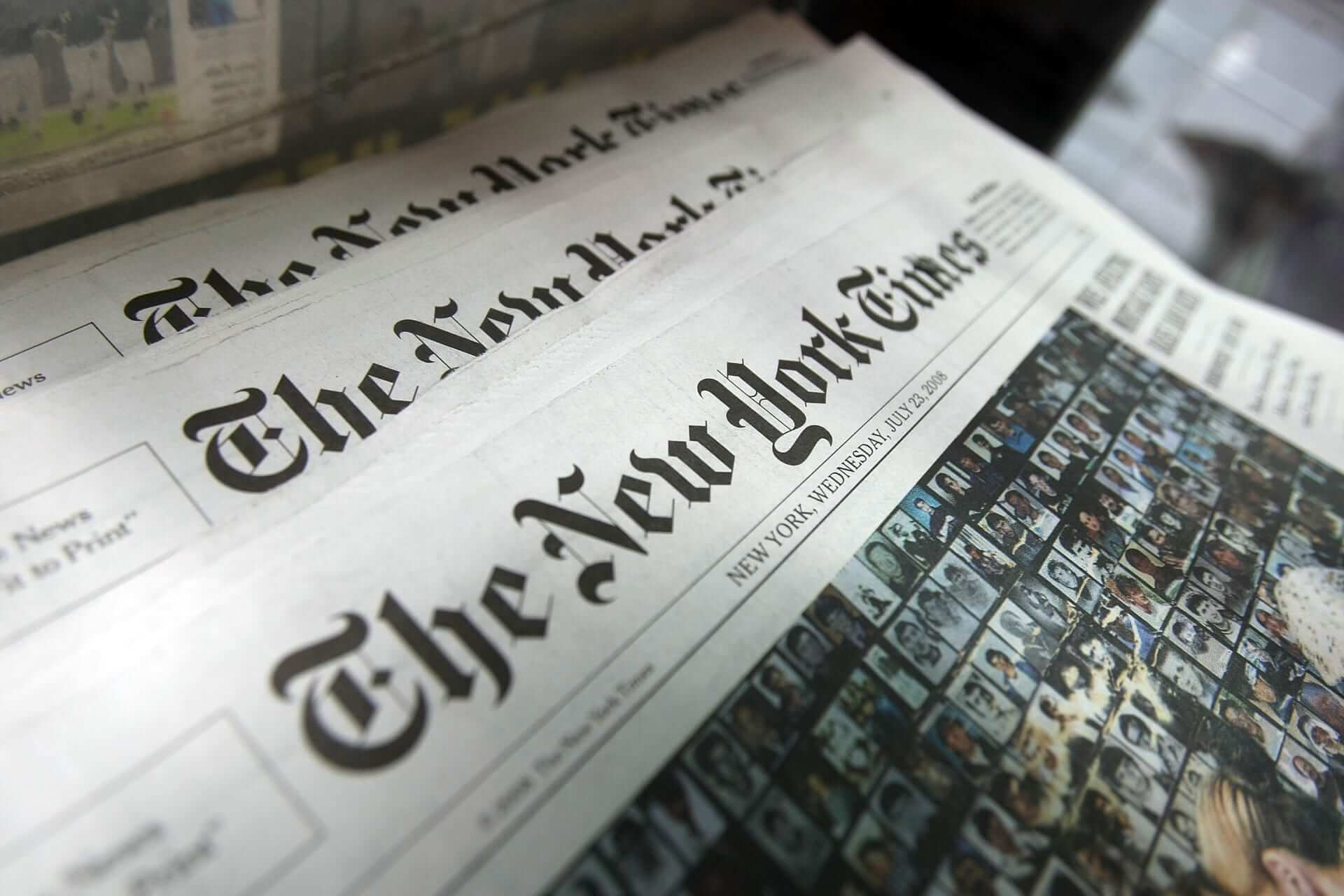
Phillips Memorial Library recently purchased campus-wide licenses to the New York Times and the Wall Street Journal websites. Both newspapers have been in publication since the mid-19th century and are currently the 2nd and 3rd largest in U.S. circulation, respectively.
There was a time when reading the newspaper was the only way for people to keep up with current events. Morning and evening papers would be delivered to the front door twice a day, keepng the public informed about breaking news in their communities and from around the world.
While this was the norm only a few decades ago, it now seems archaic to younger generations, college students in particular.
As the world becomes more digitized, it may seem like there is a lesser need for newspapers. This may be true in the physical sense — people are now more likely to scroll through articles on the Internet than actually flip through the paper.
But even in the world of Twitter feeds and Facebook updates, a newspaper can still be one of the most reliable sources of information.
Recognizing this modern dilemma, and in an effort to evolve in the digital world, almost all newspapers are now accessible online. This is not only true of issues that are currently being published, but many sites include past publications with articles spanning throughout history.
Content from these publications is already available to the PC community via the library’s databases, however, the new partnership will allow direct access to the New York Times and the Wall Street Journal websites.
There are many benefits of this added feature. Assistant Library Director Sarah Edmonds explained, “Access to their websites allows for browsing and a more immediate, dynamic experience.”
These are great academic resources, and many students utilize the already existing databases for research purposes. However, the new partnership has a wide range of benefits beyond academics, and the library hopes the community will take the opportunity to explore them.
“We know that they are great tools for teaching, as well as professional and personal growth and civic engagement,” said Edmonds. “We hope that many members of the PC community will take advantage of these partnerships.”
These services will be available free of charge to everyone in the PC community—students, staff, and faculty.
To sign up, contact Edmonds, or stop by Phillips Memorial Library to get more information.