
Tag: snow
No Way Out of the Snow
by Maria Mantini ’26 on February 5, 2026
Opinion - Campus
On Jan. 25, I watched from my window as mounds of snow began to accumulate all over campus and visibility lowered to a cloudy white haze. With classes canceled for the next day, this was a prime day to catch up with friends, binge watch the show you’ve been meaning to start, or grab whatever you could find in your dorm and go sledding down the Guzman Hall hill. By the end of the day, the snow was knee-deep. After the snowfall continued into Monday, parts of Rhode Island were left covered in 11.5–20 inches of snow.
By Tuesday, the college was able to hold classes and most pathways had been salted and cleared off. However, there was one blaring exception to the college’s clean-up efforts: the student parking lots. A quick walk through any student lot on campus proved that cars that were parked before the storm were still parked there a few days later, unable to move from the mounds of snow that surrounded them.
My friend is currently a full-time student teacher at a local elementary school. After a virtual teaching day on Monday, we walked to the Hunt-Cavanagh Lot to check on her car and it was clear that she would not be able to drive it the next day. The snow surrounding the car was over a foot deep and extended more than a foot behind it. While plows had come through to clear open parts of the lot, no effort had been made to remove the snow near any of the cars.
Relying on her car to get to student teaching, she went to the Office of Public Safety to ask when the lots would be cleared, to which the answer was a firm, “we don’t know.” This lapse in effort on the part of the college caused her to miss student teaching on Tuesday (a day she will have to make up later in the semester) and take an Uber to her school on Wednesday. Other student teachers expressed similar concerns about their ability to travel and even their reputations for having to miss work. Providence College should not be preventing students from being able to attend something that is part of their required course of studies.
With faculty lots largely cleared, it seems that the priority in the clean up was the college’s ability to hold classes as soon as possible. My friend received no communication from Public Safety or the Office of Transportation about what to do or what the timeline was for clearing the lots. She even mentioned to me that she wouldn’t mind shoveling out her own car if the college provided shovels. Instead, she was left desperately asking around for one, not anticipating beforehand that this would be a problem. Her car was not cleared out until Wednesday night.
With the $400 students are paying a year to park on campus, the lack of attention and communication about this matter is appalling. Many students do not keep cars on campus just for fun, but rather rely on them to get to student teaching, jobs, nursing clinicals, or other obligations. It is understandable that the college would need some time to get snow cleared away after a storm of this magnitude, but the student lots were cleared days after the rest of campus was. The least Providence College could have done was communicate the plans to their students. By not making an effort to assist with this matter and giving no clear timeline for this work to be done, the school is making a stark statement that these student interests are a low priority.
Winter Storm Leaves Communities Reeling: Snow, Ice, and Destruction Lingers
by Clara Johnson ’26 on February 5, 2026
News
Last week, a winter storm characterized by ice, sleet, and copious amounts of snow struck the United States, causing major power outages, severe damage, and inaccessible roads. The storm, which has been unofficially named Winter Storm Fern by the Weather Channel, brought historic weather to large swaths of Mexico, Canada, and the U.S.
In the Northeast, over a foot of snow fell, with some places, including Providence, RI, experiencing more than 20 inches of snow. The snowfall resulted in school and business closures across the region, though most institutions were able to reopen by mid-week. Across the country, there were record low temperatures that have not been seen in decades. In some states, the wind chill reached as low as negative 40 degrees Fahrenheit.
While loads of snow were dumped in the Northeast, the South was frozen over. A deep freeze brought ice, which weighed down powerlines and trees, causing them to snap. These downed powerlines and fallen trees caused hundreds of thousands of homes and businesses to lose power. Obstruction caused by tree branches and ice have made it difficult for the National Electric Service to restore power in many of these places. In many Southern localities, infrastructure was overwhelmed, as these areas are not accustomed to contending with such harsh winter storms. As of this week, 136,000 people across the U.S. still remain without power in the freezing weather.
One city that was hit particularly hard by outages was Nashville, TN, with one resident telling The Cowl, “We were without power and heat for six days and still don’t have hot water.” She went on to describe, “It felt almost like a hurricane. Things looked apocalyptic. There were downed trees, downed powerlines. It was awful.”
These catastrophic conditions have been confirmed to be responsible for the deaths of 87 people throughout the U.S. Fatalities have been linked to cold exposure, vehicle accidents, and cardiac emergencies. This includes one man who was found dead because of cold exposure on Wednesday, Jan. 28, in downtown Providence.
As of now, the snow, the cold, and the destruction linger, as people struggle to recover from the impacts of the historic freeze that struck North America last week.
s n o w
by Hanna Boudreau ’28 on January 29, 2026
Portfolio - Poetry
s
n
o
w
cover me—hide me—when I am overcome with woe
s
n
o
w
comfort me—console me—when I know not where to go
s
n
o
w
call me—christen me—with the name which you bestow
s
n
o
w
catch me—carry me—when I trip over my own shadow
s
n
o
w
coddle me—cradle me—like an old weeping willow
s
n
o
w
challenge me–captivate me—like the swirling art of Van Gogh
s
n
o
w
compliment me—celebrate me—as one does a beautiful rainbow
s
n
o
w
cure me—complete me—never let me go
Lone Star State Besieged by Bad Weather: Biden Declares Major Disaster in Texas
by The Cowl Editor on February 25, 2021
News
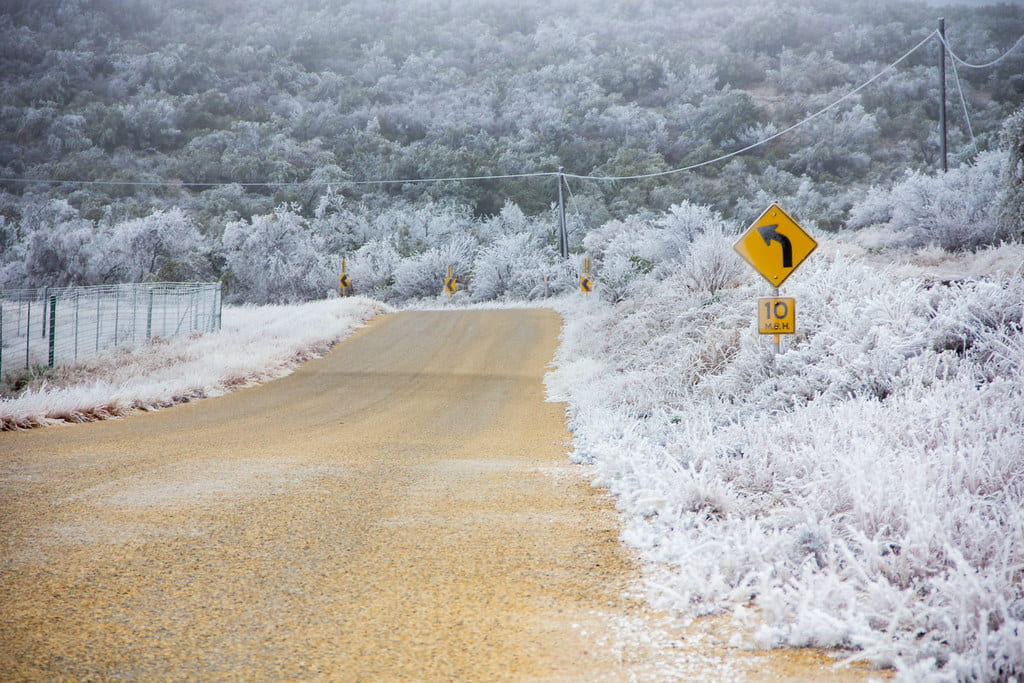
by Eileen Cooney ’23
News Staff
On Feb. 20, President Joseph Biden declared a major disaster for the majority of the state of Texas in the wake of a severe winter storm that left most of the state without electricity and killed 28 people. In recent days, more than 14 million Texans have been under boil water advisories, which remain in effect for more than 189 counties. The Texas Army National Guard has been deployed across the state in order to conduct welfare checks, assist local authorities, and find those who are in need of warming stations. Additionally, since many Texans are without water, the National Guard has delivered more than 28,000 water bottles.
President Biden’s declaration of a major disaster unlocks grants for temporary housing, home repairs, and low-cost loans in order to protect those who have property that is uninsured. In addition, these funds will help small businesses recover from the effects of the storm and provide federal aid to local government offices and nonprofit organizations so that they can provide protective measures and enact danger mitigation efforts.
Additionally, congresswoman Alexandria Ocasio-Cortez has helped raise more than $4 million in relief efforts in conjunction with Texas’s 29th congressional representative, Sylvia Garcia, and Rep. Sheila Jackson Lee, who represents Houston, TX. In a press conference, Ocasio-Cortez said, “This shows that New York stands with you, but the whole country also stands with you.”
This is in sharp contrast to other politicians who have taken heat for their response to the storm in recent days, in particular, Senator Ted Cruz of Texas. On Wednesday, Feb. 17, Cruz was seen boarding a flight with his family to Cancún, Mexico while millions of his constituents remained without power or running water in record cold temperatures. Cruz claimed that he was traveling to Cancún “to be a good dad” to his daughters and wife, saying, “On the one hand, all of us who are parents have a responsibility to take care of our kids, take care of our families. But I also have a responsibility that I take very seriously in fighting for the state of Texas.”
For at least 12 hours after photos emerged of him at the airport, Cruz’s office refused to provide a comment. However, after facing intense public backlash, Cruz flew home, admitting that the trip was “obviously a mistake” and that he had “second thoughts” about it. He spent just one day on his trip.
This winter crisis in Texas and other states across southern America has profound implications, suggesting that climate change is bringing with it intense, volatile fluctuations in weather patterns. Alice Hill, who oversaw planning for climate change risks under the Obama administration, says, “We are colliding with a future of extremes.” Experts have been warning that other states and electrical grid operators should take note of the causes of the current situation in Texas.
On Saturday, the Public Utility Commission of Texas, Texas’s utility regulator, reported that it was investigating the factors that, combined with extreme winter weather effects, disrupted the distribution of electricity to millions of Texans. Additionally, Governor Greg Abbott is convening an emergency meeting to investigate and examine what occurred.