
Tag: art
The Beautician’s Uselessness
by Benedict Bergeron ’29 on April 16, 2026
Portfolio - Poetry
Can one beautician work on thee
And make thy features better still?
Nay, none may yet augment and free
A greater face than what we see.
For beauty showeth out in thee
Akin to gorgeous our one God.
Thou art yet the epitome
Of things that strike an awe in me.
Where Are The Funnies?: A Golden Age Gone Too Soon
by Ian Gualtiere ’27 on January 29, 2026
A&E - Art
The concept of a printed newspaper has been popular since the 15th century, when the invention of the printing press in Europe made information on weather, economics, politics, and social issues a routine morning necessity. A newspaper must follow four major criteria: public accessibility; periodicity, where the newspaper must be published in either daily or weekly intervals; currency, where the published information is as up to date as possible; and universality. American newspapers gained frequency and popularity throughout the 19th and 20th centuries; the papers published historical events ranging from the sinking of the Titanic in 1912 to the Watergate Scandal in the early 1970s. Newspapers continue to inform the public of breaking news to this day, with major publications such as The New York Times and the Wall Street Journal becoming American institutions, subject to public praise and dismay, depending on political affiliation. The speed at which news has been reported, covered, and critiqued has only increased with momentous fervor, much to the detriment of honesty and integrity. This rapidity can be highlighted by the major technological advancements of the last 100 years. News has been broadcast from the advent of the radio in the 1920s to social media apps in the 2010s. However, throughout these changes, one extra category that should be added to the criteria of a successful paper rose in popularity, achieved great social acceptance, and diminished when the news went online; the hand-drawn comic strips, otherwise known as the “funnies.”
It would be Paul Simon’s commentary on a fear of becoming inauthentic and caricature-like in his 1986 hit, “You Can Call Me Al,” that has taken on literal meaning in the 21st century: “don’t wanna end up a cartoon in a cartoon graveyard.” With the demise of weekly comic strips in major papers, there are hundreds of websites that reissue and rerun old comics for those who are desperate. In effect, the internet has become scattered with nostalgic “cartoon graveyards.”
The early decades of the 20th century had comics such as Little Orphan Annie or Popeye the Sailor Man that sprawled the entire width of the page, but with the commercial competition of the 1930s, mass paper shortages after World War II, the decline of news readership, and higher printing costs during the 1950s and 1960s, comic strips began to shrink and became consolidated in the modern three to four boxes typical to a modern newspaper. This adversity, however, created diverse and wonderful new forms of artistic expression through such a limited medium. Humor moved away from slapstick, physical comedy, to more cerebral and educated satires on American life. From Charlie Brown and Snoopy’s philosophical ponderings in Peanuts to the amusingly daring and Pulitzer Prize-winning commentary on the Watergate Scandal in Doonesbury, the fears, anxieties, hopes, and dreams that remained in the consciousness of the American public were played out in four small boxes. But what about humor that expresses and tries to search for the bigger point of the human collective deep in the 21st century? Strips like Garfield, The Family Circus, Dilbert, Pearls Before Swine, and Non Sequitur continue to produce, albeit at a slow rate, strips that focus on the digital age, partisan polarization, human connection, and family ties.
The struggle that modern cartoons face is the decline not only in numbers in readership, but also in originality. Due to the extreme popularity of certain comic strips in the mid to late 20th century, after the original author has passed away publishing syndicates continue to produce new strips with the use of “second authors.” These are typically close relatives of the original authors, hired authors, or even large teams of authors who draw strips for weeks, months, and even years in advance to replicate the artistic vision and humor of the deceased author. These “zombie strips,” lacking original authorship and creativity, have been severely criticized by cartoonists such as Bill Watterson of Calvin and Hobbes, who retired the strip on his own grounds in 1995, and Charles Schulz of Peanuts, who requested the strip to be retired after he died in 2000 and compared the hiring of a second author to “a golfer hiring a man to make his putts.”
Humor played out in its sharpest, quickest, and rarest form: four small boxes. It was with these four boxes that much of the United States’ taste of humor formed, cultured, and advanced as the years progressed. What has been lost with not only the decline of cartoons, but newspapers as a whole, is the collective human interest and humor. The rise of social media has created algorithms and tunnels that trap its viewers into forming tastes that are widely different from those of the people sitting next to them. Gone is the collective laugh from the audience; now we just hear chuckles at scattered intervals. Maybe the aforementioned Paul Simon lyric can both be literal and figurative; we have lost that sense of authenticity and originality that comes with the analogue form, and all we have left are the billions of “cartoon graveyards” that live on in our day to day media consumption, leaving us just not knowing what to laugh at.
Moonlit Blanket
by Grace Pappadellis ’29 on December 11, 2025
Portfolio - Poetry
Fitful night sleep,
flitting of birds,
they dance like tree ornaments in a cove of blonde light.
I watch from my window,
the streets are bleak and clean.
Will the snow fall as it did last year?
My lively breath has been rapid and full of anguish,
let me stare at the sky.
A glimpse of a star
created a blanket for my heart, a quilt of fabric, spun from moonlight,
the fairytales you read about,
threads of light, feathers, flakes of ice and snow.
Spun around, fast and blizzard-like,
the colors are tangible, clear, the material falls over me,
protective, sheeny, its magic cures me of my restlessness.
I can sleep with the intertwinement, the rays of the moon, all in one place.
I don’t need snow as I did last season.
I would never turn down its arrival,
only delegate it as another layer.
Moonlight trickles in through my window,
Winter will never be the same.
What’s Displayed in Ruane?: A Bold Exploration of Christianity
by Ian Gualtiere ’27 and Tom Marinelli ’26 on November 13, 2025
A&E - Art
Recently placed in the Ruane Center for the Humanities 105, three wonderfully large and impressive paintings will dominate the wall of the lecture room for the rest of the fall semester. In an attempt to respond to a long and celebrated tradition of Italian art, mingled with a heavy influence of Christian iconography, artist Bruce Herman’s ambitious piece on the story of the Blessed Virgin Mary is presented in bold colors along with an extreme reverence for the subject matter. Herman has stated that, “Tradition is the substrate of every thought, every feeling, every work of art—whether acknowledged or not. Our very ability to communicate at all is contingent on tradition.”
Imbued with the knowledge and respect for both Italian Renaissance art and Christian teachings, Herman explores three important stages of the Blessed Virgin before even giving birth to Jesus Christ. The series is meant to be viewed from right to left, the same as Hebrew is read. Lifted directly from the Gospel of Luke is the Annunciation, where the angel Gabriel announces to the Blessed Virgin Mary that she will conceive and give birth to the Son of God. The middle scene, adorned with gold coloring to show the all-encompassing glory of the Lord, is the Incarnation, where the Word of God became flesh through conception. Though it is not directly stated in the Gospels, this is usually celebrated on March 25 (nine months before Christmas). The third scene is the Visitation of the Blessed Virgin to her cousin Elizabeth, also with child, who would later become John the Baptist, and where the famous lines of “Blessed art thou among women, and blessed is the fruit of thy womb” (Luke 1:42) are spoken. With a twinge of modern boldness and traditional reverence, Herman expertly creates a triptych of three of the most consequential events in Christianity.
These three paintings, passed by all the Development of Western Civilization students, fit perfectly in the large classroom. To me, they almost look like a dreamscape, or a fresco, something from an old, but not forgotten, world. The colors in particular are vibrant: blues, yellows, and white mountains in the back. It’s not a traditional piece whatsoever, but that only adds to its appeal. This Friday, Nov. 14, at 3:30 p.m., you and your friends can see it in Ruane 105, where the Humanities Department will host Herman to share insights on his work and answer any questions. At a school like Providence College, where the humanities are arguably valued as much as any other discipline, it’s always nice to have active engagement from scholars and artists alike who are willing to present to students.
Herman’s visit is a great opportunity to witness a dialogue between faith, tradition, and creativity—the cornerstone of Providence College. Whether you’re an art enthusiast, a theology student, or simply someone who’s genuinely curious, this forum will be right up your alley, and everyone is encouraged to attend. Again, that’s Friday, Nov. 14, at 3:30 p.m. in Ruane 105, so don’t miss it!
Is Throwing Cans of Soup the Solution to Climate Change?
by Kaelin Ferland '23 on November 3, 2022
Opinion Staff
Opinion
The United Nations released a report just last week about how we are in dire need of climate action, explaining that “the world is still falling short of the Paris climate goals, with no credible pathway to 1.5 degrees C in place.” With these goals out of reach and no concrete plans to prevent our planet from warming an additional 1.5 degrees C, the UN warns that it seems as though immediate changes will be necessary to prevent climate catastrophe.
World leaders are not doing enough. The report adds that the COP26 Summit held last year did practically nothing to help mitigate climate change at the level that we need to. The UN explains that we will need to decrease greenhouse gas emissions by 45 percent in the next eight years. This number is unheard of, proving how desperately we need climate action and have waited too long. With a World Meteorological Organization report published the day before the UN’s statement that 2021 was a record-breaking year for greenhouse gas emissions, it seems as though climate change poses its greatest threat yet.
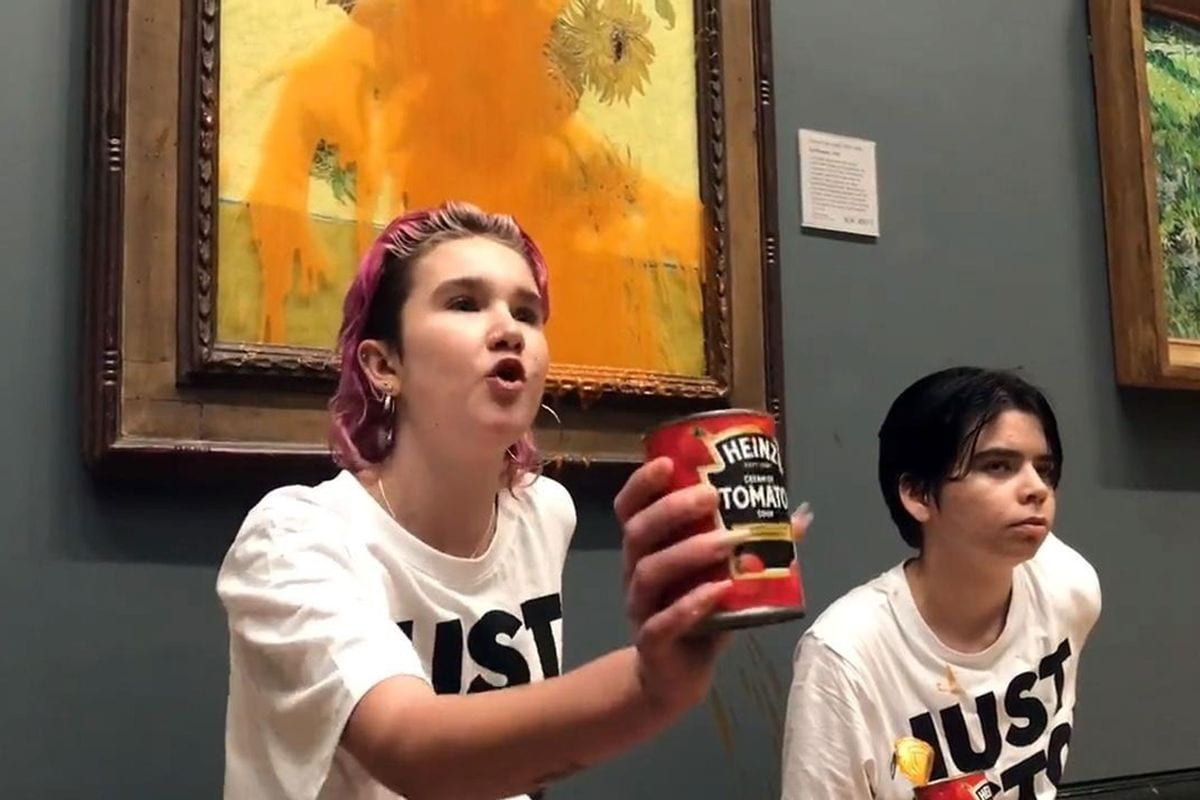
Even as individuals protest and scientists make constant warnings, politicians don’t listen. Recently, activists representing the Just Stop Oil organization have escalated their protests, for example, by throwing soup at Van Gogh’s Sunflowers and mashed potatoes at Les Meules by Monet. One activist even glued his head to Vermeer’s famous Girl with a Pearl Earring. None of the paintings were ruined in the process.
For many, these acts don’t make sense, and they are unsure of how these paintings connect to climate change and environmental issues. Others are worried about how these protests could cause environmentalists to be viewed in a negative light. However, some did support the Just Stop Oil protestors, pointing out how it’s frustrating that people are more angered about these actions than the lack of political action in the environmental sector.
It is confusing why the activists are targeting these paintings, specifically, given they have no relation to climate change; however, this isn’t the point of these demonstrations. The activists are trying to make a statement about how these paintings will be worthless if we continue to do nothing. In our society, it can feel like our traditional forms of protesting are not enough. Every September, Fridays for Future organizes a global climate strike involving hundreds of locations around the world and hundreds of thousands of protestors. In Germany alone, there were protests in 270 cities and approximately 280,000 people took to the streets. However, every year it seems as though these protests are overlooked and ignored by world leaders who continue to not take political action.
These protests haven’t caused nearly as much conversation about climate change as these activists have. While the Just Stop Oil demonstrations are over the top and seem to go too far, they have been effective in starting a massive conversation about climate change. However, as with most protests, this attention will be short-lived, and society will move on and forget. These efforts will ultimately be overlooked and climate action will be delayed, despite the scientists’ warnings and our demands for change.
The Amazing Spider-Artist
by on February 18, 2022
A&E - Art
The Amazing Spider-Artist
Tomás Saraceno Combines Passions for Art, Spiders, and More in New Exhibit
Claudia Fennell ’24
Tomás Saranceno is trailblazing through the art world with his unique, futuristic art. Inspired by his passion for a need for environmental reform, his work reflects the dilapidated environment that his Berlin studio is located in. Saranceno is now gaining popularity for his public art installations, such as his transparent bubbles and enormous spider-web-like sculpture creations.
Born in San Miguel de Tucumán, Argentina in 1973, the 48-year-old artist studied architecture at Universidad Nacional de Buenos Aires in the late ’90s. After finishing his undergraduate education, he went to Europe to complete his postgraduate studies at the German art school Städelschule. Once Saranceno finished his schooling, he began to undertake his goal of creating culturally relevant art.
In 2012, he bought a studio in Berlin. It was a crumbling brick building sitting on land that had been used for industrial purposes for over a hundred years, causing the property itself and the land surrounding it to become toxic. As the New York Times reports, Saranceno remembers being warned when buying his studio, “Please don’t plant apple trees near the street…people will eat an apple and be poisoned.” Surrounded by this toxic wasteland, Saranceno became inspired to create artwork that reflected his environment.
Notably, aside from creating such art, Saranceno has produced scholarly research about his two main areas of interest: spiders and solar-powered balloons. His research, combined with his interest in art, has allowed him to combine art, architecture, physics and other aspects of the natural world, and engineering to create his masterpieces.
Saranceno’s largest U.S. exhibition to date will be on display at The Shed, a New York City museum located at The Bloomberg Building on 30th Street. According to their website, “The Shed is a new cultural institution of and for the 21st century…[it] was designed to break with the traditions that separate art forms and audiences.” The museum describes Saranceno’s work as a large-scale exhibition that offers viewers a sensory experience.
Saranceno’s art installation is centered around the concept of spiderwebs and allows the viewers to partake in the experience of being one with a spiderweb. It is titled “Free the Air” and is composed of two spider-web-like creations made out of metal. The piece is suspended in a balloon,a nod to Saranceno’s other major passion aside from spiders and art.
The installation is also massive in size: its balloon has a diameter of 95 feet and fills the entirety of The Shed’s 17,000-square-foot courtyard. One of the webs lies 40 feet from the ground, and the other web lies 12 feet off the ground. The total diameter of these pieces is 48 feet.
45 people at a time are allowed to be admitted to experience the piece, and each person is allotted an eight-minute time slot to remain within it and observe it. The installation allows viewers to lie on its nets as its lights dim, which, as Saranceno explains, is intended to show viewers what the world would look like from the perspective of a spider, a creature with lackluster vision.
Needless to say, this installation offers viewers a unique experience, unlike anything they could find at other museums. Saranceno’s work will be on display at The Shed from Feb. 11 to April 17.
Van Gogh Watercolor to be Sold at Auction
by The Cowl Editor on November 4, 2021
A&E - Art
Van Gogh Watercolor to be Sold at Auction
A Look at Wheatstacks‘ Complicated History
Claudia Fennell ’24
In 1888, famous artist Vincent van Gogh traveled to the French countryside while he was in poor health. While there, he became infatuated with the farming lands around him, which inspired him to create several watercolor paintings depicting “Meules de Blé,” or “Wheatstacks.” Some of these paintings simply show the harvested wheat itself, while others, including one particular watercolor titled Wheatstacks, include women working in the fields as well.
During this time in his art career, Van Gogh was influenced heavily by Japanese art and Wheatstacks, with graphic-like brushstrokes, is an example of how Japanese artwork inspired him. Japanese art influenced so many Western European artists that the French eventually coined the term “Japonisme” to refer to the influence Japanese art had over European artists in the late 19th century.
Wheatstacks has changed hands several times since Van Gogh created it in 1888. The painter first gave the piece to his brother, Theo, who sold it to a Jewish man named Max Meirowsky in 1913. Meirowsky held onto the piece for some time, before the chaos of World War Ⅱ forced him to flee and he gave the piece to an art dealership. Soon thereafter, it was bought by Frenchman Miriam Caroline Alexandrine de Rothschild, who also fled his home when the war broke out. When the Nazis invaded France, they looted de Rothschild’s property. The Nazis stole her art collection, including Van Gogh’s watercolor, and in 1941 they placed it in a museum titled Jeu de Paume, where they stored many of their stolen goods.
After the war, de Rothschild tried to reclaim Wheatstacks but struggled to do so. The piece eventually ended up at a gallery in New York City where it was purchased by Texas oil businessman, Edward Lochride Cox. Following Cox’s death, disputes broke out between Meirowsky, de Rothschild, and Cox’s family over who had rightful ownership over the piece. Eventually, the parties came to a settlement agreement: the profits from the piece would be divided among the three of them.
Wheatstacks has not been seen by the public since 1905 when it was on display with some of Van Gogh’s other works at the Stedelijk Museum in Amsterdam. Now, the piece is being sold by the auction house Christie’s, who estimate that it could be auctioned for anywhere between $20 and 30 million. Wheatstacks is expected to break a record for the highest selling price for a paper Van Gogh work. The previous record was from his piece “La Moisson en Provence,” which sold for $14.7 million in 1997.
Nazi-looted artwork has been at the center of news headlines for the past few years, as other famous, stolen pieces from artists such as Camille Pissarro and Gari Melchers have been sold at auction for millions. It is important that these valuable works continue to be tracked down and returned to their rightful owners as well as that these rightful owners receive any proceeds from them.
Boy
by The Cowl Editor on October 21, 2021
Portfolio
by Kate Ward ’23
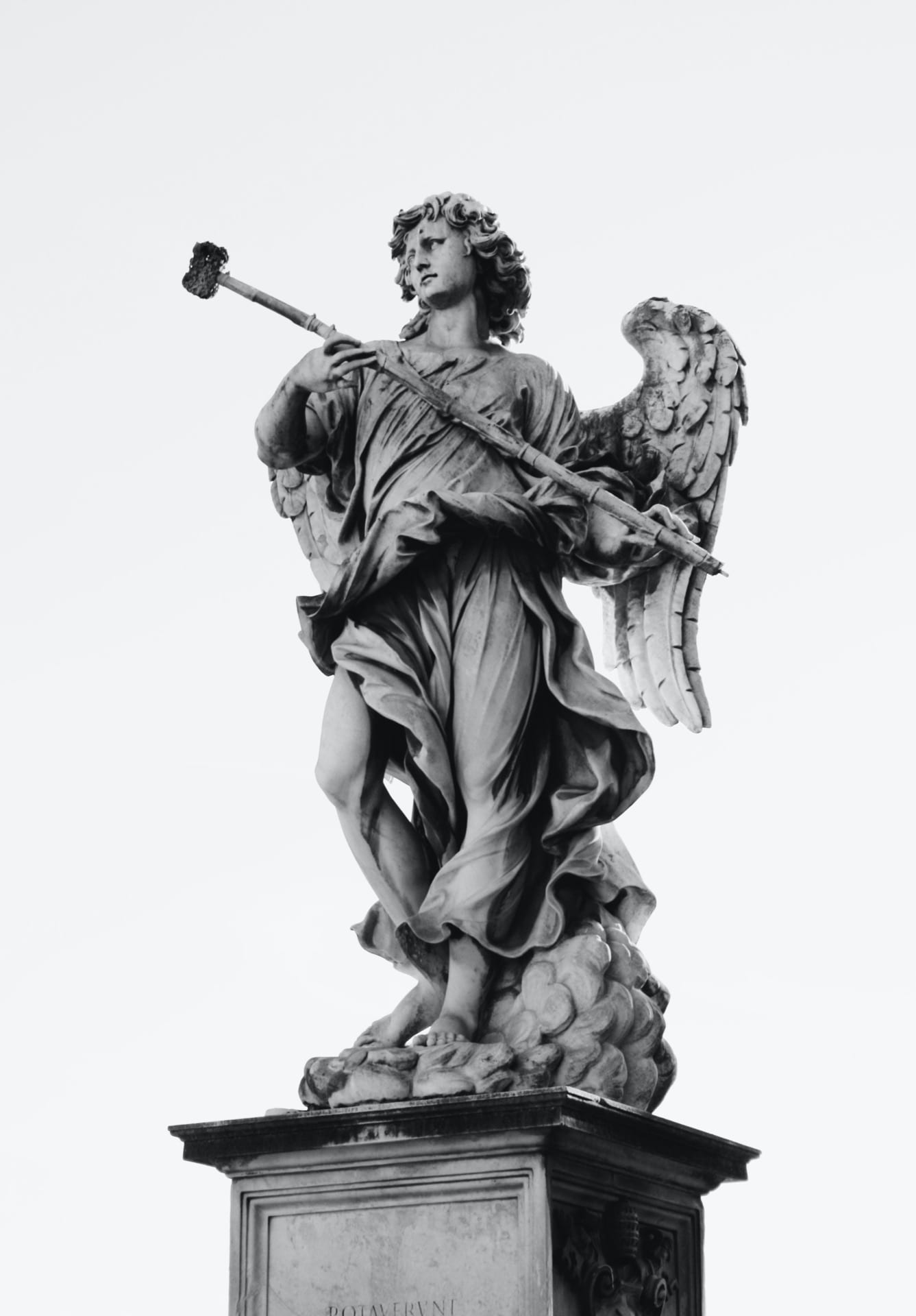
The painting had been sitting across from the Greek statue for the past 50 or so years, and she had never grown tired of looking at him. His body was strong but not in the ways women liked now; he was strong like a field hand or someone with a particular knack for swimming. His hair was wavy and, despite being frozen in time, she could’ve sworn it moved from time to time. It was as if he had been chained or was frozen in place and plaster was poured over him and occasionally his movements would break the plaster form. People were drawn to him like moths to a flame, maybe because he’s one of the only statues in a room full of paintings, or maybe because the whole museum was full of paintings and only a handful of statues.
She liked watching how the people “ooh”-ed and “ahh”-ed, and mothers smacking away children’s hands if they got too close to touching his smooth flesh. She was sure he wouldn’t mind if they touched him; he had a kind face, so she was sure he would be okay with a child. The family came to her painting next, the little kid pointing out the lamb that lay beside her, his head in her lap. The kid looked up at his mother and asked if she thought the lamb had a name, the mother shook her head and continued reading the panel of information next to the frame. The lamb did have a name, Kritios, in reference to the Greek sculpture “Kritios Boy.” She named him that when she discovered that the statue was Greek.
She had never heard of Greece or where it was, and she couldn’t pick up much information from the people passing by the frame and the thick coats of paint that smothered her made it difficult to hear. A lot of the time she would only understand if someone was pointing and looking to another for guidance like the child and his mother. She wondered what she could learn if the museum ever took her off the wall and transported her to that far away place. Or maybe she was there and didn’t even know.
The seasons came and went and visitors began to dwindle. She noticed the lights stayed off more than they were on, and the paintings across from her were taken down and packed into wooden crates. She looked down at Boy then back at the statue. She could’ve sworn his expression was more glum than it was normally. She hoped that wherever he was going she could come along and get to gaze at him a little while longer. The day arrived when her frame was lifted from its mounting and her vision was obscured with cloth and layer upon layer of clouded plastic…bubble wrap, she thought she heard someone say. With one last gaze, she saw that her statue was still rooted in place. Clearly there was no intention to move him. She was set inside a nest of shavings and other squiggly objects. Something slid over her, large and heavy, and then she was moving, and she knew she would never see her statue again.
Nothing Good Starts on a Getaway Scooter
by The Cowl Editor on October 7, 2021
A&E - Art
Nothing Good Starts on a Getaway Scooter
59 Year-Old Man Convicted in Theft of Van Gogh and Hals Paintings
Claudia Fennell ’24
On Friday, Sept. 24, a three-judge panel met in the Netherlands and came to a verdict that sentenced an unnamed 59-year-old man—identified as Nils M.—to eight years in prison and ordered him to pay a hefty fine. Indeed, the court condemned his wrongdoing as a serious crime, determined to make him pay the price for his actions by sentencing him to the maximum possible imprisonment for his actions.
What was this man convicted of?
The Dutch car repairman is charged with stealing expensive and historic paintings. He left behind two pieces of DNA evidence, one at each of the two crime scenes. These traces have led prosecutors to apprehend him for the thefts of a Vincent van Gogh painting and a Frans Hals painting.
In March 2020, the van Gogh painting titled “The Parsonage Garden at Nuenen in Spring,” painted in 1884, was stolen from the Singer museum in the Netherlands. This painting is valued at $2.9 million. The thief used a sledgehammer to break the two doors, giving him access to the museum. He also used explosives to open another door. However, he failed to think of everything—part of a broken frame left behind at the museum contained his DNA.
In August 2020, the painting titled “Two Laughing Boys with a Mug of Beer,” painted in 1626 by Frans Hans, was stolen from the Netherlands’ Museum Het Hofje van Aerden. This painting is valued at $17.6 million. In this robbery, the thief broke the museum’s back doors and left DNA evidence on a tension strap that he used to lower either the painting or himself. As a car repairman, he had access to these straps, and they were found present in the garage that he worked in. He claims, however, that he did not know how they ended up at the crime scene.
In addition to the matching DNA at both scenes, the robberies that occurred in May and August were similar in that the museums were broken into at about the same time, with force used to enter, and the criminal drove away with a partner on a scooter to escape after stealing both pieces of artwork.
The DNA and behavioral evidence at the crime scenes led detectives to the Dutch car repairman, whose DNA was already in their database because of a previous arrest for the theft of 17th-century antiques for which he spent five years in prison.
The Netherlands courts, as well as the public, expressed that these paintings have cultural and historical significance for them. When speaking to the Independent, the court said, “That is why, and given the criminal record of the suspect who is, according to the court, an incorrigible and calculating criminal, the court considers the maximum sentence to be appropriate.” The Netherlands courts want to set an example by giving this man the maximum sentence possible for his thievery to discourage others from attempting the same crimes.
While the police have not been able to recover the stolen paintings, they did find over 10,000 ecstasy pills at the criminal’s house, which could validate their theory that his art thefts were tied to the drug world. When speaking to the New York Times, Arthur Brand, a private art detective, said that he “believes there is demand in the Dutch underworld for artworks. People accused of drug crimes could think that a stolen artwork could potentially be surrendered to the authorities in exchange for a lesser sentence.” Apparently, the demand for stolen art has risen, and the Dutch car repairman decided to supply it. Although he still claims his innocence in the crimes, he will now spend eight years in prison for that decision.