
Tag: humanities forum
The Humanities Forum
by Sarah McCall ’26 on April 23, 2026
News
The Age of Hitler and How We Will Survive It
On Friday, April 17, the Humanities Forum invited Alec Ryrie of Durham University to present on his most recent book: The Age of Hitler and How We Will Survive It. Ryrie is a historian of Protestant Christianity and specializes in early modern England and Scotland, specifically how beliefs and values impact the social world. His most recent book is a deviant from his normal research, as it has much less to do with religion. However, it is similar to his field of research in its focus on how human values impact the social world in which we live. Ryrie acknowledged the current relevance of Christianity and politics at the beginning of his talk, mentioning the discourse surrounding the United States’ President Donald Trump and Pope Leo XIV, saying, “It is very interesting to talk about this on a Catholic campus this week.”
Ryrie started by citing ABC’s The Greatest Story Ever Told, which began broadcasting in 1947. At the time, the title did not need any further context; it was very clearly about Jesus. Even if individuals were not traditionally religious, they still viewed Jesus as the greatest moral figure. He was the baseline for what it meant to be a good person.
By 1965, however, no one cared for the story anymore. The baseline for genuine good and evil had shifted. For thousands of years people had viewed Jesus as the determinant for what it meant to be good. Yet, a new figure was determining the baseline for evil in social contexts. That person, Ryrie argues, is Adolf Hitler. After World War II, people used Hitler to define evil. The narrative no longer was about becoming Jesus-like through good deeds, it was instead about not becoming Hitler-like through evil acts. Ryrie’s concern with this is that it “teaches us what to hate, but not what to love.”
Ryrie also analyzed the larger impact of this shift. Hitler is a secular individual, therefore he believes that this represents a societal turn away from religion. Ryrie additionally cites examples within the U.S. of a turn away from religion. For example, civil rights organizations played down their religious origins in order to appeal to a larger group of people. Additionally, no one had the same emotional response to Christ that they once did. Instead, cultural empathy was placed towards individuals impacted by World War II.
This shift was not accidental, Ryrie argued, saying that “the appetite for this story has not gone away.” Dozens of movies and films have been made about World War II, even more with indirect messaging. Schindler’s List, Inglorious Bastards, and Fury were all examples of direct representation of World War II, while Star Wars, Harry Potter, and Lord of the Rings were examples with indirect messaging. Nazis and Hitler have become a staple image in the media and society of pure evil. Godwin’s Law about internet discussion cites Nazi as the ultimate insult. “Grammar Nazis” and “Little Hitler” are phrases used consistently. Ryrie argued that Nazis come as readily to our mind as the devil did in the Middle Ages.
However, in recent history WWII has been losing its moral centrality. The societal realization that racism is the consistent evil, and Naziism was just a part of this has become a much larger narrative. This has become evident through countries grappling with colonialism, slavery, and exploitation. Ryrie, however, argues that this move away from WWII as our basis for moral centrality is not entirely productive. People have begun to forget the messages that we learned from WWII. He conceded that the focus on Naziism was overdone, but millions died for humanity to learn this lesson and it cannot be so easily forgotten.
Ryrie ended his talk by emphasizing the importance of remembering this message, but also a need to bring back deeper tradition. Catholics and Christians have long developed a basis for what good should look like. This needs to be revived, he argues. The past and its tradition cannot be erased. Society has to move forward and find authentic good once more.
There are two more Humanities Forums occurring this semester. The first will be “This Vast Enterprise: A New History of Lewis & Clark,” presented by Craig Fehrman on Friday, April 24 at 3:30 p.m. in the Ruane Center for the Humanities, room 105. The last Humanities Forum of the semester will be “Human Dignity in the Algorithmic Society” by Paolo Carozza on Friday, May 1, at 3:30 p.m. in Ruane 105.
Michael Sullivan ’88, J.D. on the Power of Truth, Courage, and Discipline of Perception Under
by Isabelle Camoin ’26 on February 5, 2026
News
On Friday, Jan. 30, the Humanities Forum hosted alumnus Dr. Michael Sullivan ’88 to speak about “Truth, Courage, and the Discipline of Perception Under Pressure.” Dr. Iain Bernhoft and Sullivan sat down in the Ruane Center for the Humanities 105 to discuss his work in law and research in individuals’ perceptions under extreme circumstances, especially states of warfare.
Sullivan, after graduating from Providence College, received a masters degree from Tufts University and went on to achieve his juris doctorate at Northeastern University. He now is a professor at American University in their department of justice, law and criminology. His work has brought him to Kosovo, Ukraine, Yugoslavia, Iraq, Afghanistan, Baghdad, and many other countries. While introducing him,. Bernhoft even mentioned that. Sullivan played a role in helping to draft the language used in the Iraqi constitution that was written in Baghdad.. Sullivan recounted his time spent in Baghdad and what it feels like to be in a warzone, explaining that one can never predict what it feels like until you are actually in it.
One of the questions Bernhoft raised to Sullivan was about how one can maintain moral clarity in extreme circumstances, such as living in a warzone. The talk concluded with its status quo procedure of having a student ask the first question. Many were curious about the uncovering and existence of an objective truth, especially in a state of extreme threat.
The Roles of A Maker: A Reflection on Art, Hospitality, and Hope
by Isabelle Camoin ’26 on November 20, 2025
News
The Humanities Forum hosted Bruce Herman on Friday, Nov. 14, where he presented a talk titled “Makers by Nature: Art, Hospitality, and Hope.” The event was held in Ruane 105, right beside Herman’s artwork, which is a recent addition to the lecture hall.
The Humanities Forum is an ongoing lecture series that takes place weekly, usually on Fridays at 3:30 p.m. It is an opportunity to continue learning outside of the classroom from professors in different subject areas.
Herman began his presentation by showing a film one of his students created. Participants got a glimpse into his life as an artist and how he is constantly awe-inspired by nature. After the video, Herman introduced three sub-themes; art, hospitality, and hope, explaining that incarnation and an unguarded gaze are important aspects of being able to participate in the three main themes put forth. The unguarded gaze is necessary for viewing art, as Herman emphasized that a work of art is incomplete without the viewer, and that a gaze, open to what the piece has to reveal, can find deeper meaning. When posed with the question, “Is there such a thing as bad art?” Herman replied in a nuanced fashion, sharing that while he knows there is such a thing as bad people, bad art is harder to classify. This is why the unguarded gaze is essential, letting down your guard to see that:
“And the End of all our exploring
Will be to arrive where we started
And know the place for the first time.”
A quote shared by Herman from T.S. Elliot, embodying the experience of the unguarded gaze as something that opens us up to new meaning and finding meaning in art, vulnerably building on its creation.
He continued by guiding participants through memories of his life, including memories of encountering forms and having experienced moments akin to divine revelation. One jarring story was that of his home, which he and his wife built alongside other members of their community in Massachusetts. Their home was struck by lightning not too long after; everything burned, except for his three paintings from the Golgotha series. The Golgotha series was inspired by Good Friday, and the paintings were the first works Herman made after his conversion to Christianity.
Reflecting on how he creates his work, Herman provided insight into what he does as a full-time maker. He emphasized that, at times, the work tends to make itself by way of a muse, which is an experience of the spirit that fills you. Herman claimed that as human beings, we are all born artists, some of us have just forgotten. The journey of our lives is something that continues to be broken and put back together.
Encompassing the themes of hospitality and incarnation, Herman called participants’ attention to the original Greek definition of symbol. Tessera hospitalis means “symbol” in Greek. This symbol is a tiny tile formed as a handshake that gets broken; one half is offered to newcomers into the home as a form of welcoming. Guests are officially welcomed into the home once the tiles are put back together, and they are incarnated into a new meaning of hospitality that has been extended to them. For Herman, this is representative of our lives: humans are constantly broken to be put back together again. His works of art are a constant process of starting and restarting. Embodying this notion in his teaching, Herman said that in order for students to pass his class, he must learn one thing from them.
Herman concluded his presentation by putting forth that everyone should embrace their ability to be a maker. This way of life is work that brings beauty, goodness, and truth together.
PC as a Polis: Humanities Forum Hosts Professor Bartlett on Importance of Rhetoric
by npatano on April 21, 2022
News
“Rhetoric is a loaded gun,” a fitting metaphor included in Professor Robert Bartlett’s Humanities Forum in the Ruane Center for Humanities on March 27. Professor Bartlett is an award-winning professor and author from Boston College and Emory University. He specializes in ancient Greek political classic philosophy and discussed the power of persuasion with the Providence College student body by highlighting the importance of the Aristotelian Rhetoric.
Bartlett is exceptionally well-versed in Aristotle’s book, Rhetoric, as his principal area of research is classical political philosophy. This book, like many of Aristotle’s works, has been a crucial philosophical vessel, handed down through generations of brilliant minds. Bartlett spoke fluidly and passionately, utilizing Aristotle’s works to describe how the early philosopher laid out passions to speak to people. Even philosophers such as Hobbes say “he was the worst teacher, politician and ethicist, but his rhetoric was rare.”
Barlett enthusiastically reviewed the three kinds of essential Aristotelian rhetoric: deliberative, judicial, and display. He cohesively explained how these three kinds of rhetoric often have three types of use: the noble, the good, and the bad. Deliberative rhetoric is often used to pursue a future goal, either to persuade or shun. Judicial is often an accusation or defense of something usually concerned with past acts. Finally, display is seen in praise speeches and usually connects us to the present tense. He also goes over the modes of persuasion: ethos, pathos and logos, which are notions of Aristotelian rhetoric often taught in PC’s Development of Western Civilization program. These modes build a sense of trust and conviction, but that conviction is not proof. Here lies the danger of rhetoric, as Bartlett explains.
Bartlett transitions to the point that with this understanding of rhetoric, there is also power. Both lies and truth can persuade humans, which is the ultimate paradox. In echoing this message, Bartlett uses the metaphor of a gun. He states that proof itself is misleading—what is proof at its very core? Bartlett states, “If I can get you angry, I haven’t proved anything, but I have instilled in you a conviction that my policy is better.” Herein lies the danger of rhetoric. Rhetoric has an “odor,” as Bartlett describes, that attaches to a phrase, a taste of manipulation, perhaps. But, as Aristotle describes, we do need rhetoric, and it comes to defending what is faithful and just. Bartlett explains that if you think the cause you serve is right, you’re being naïve without rhetoric to provide proof. If you become alive because a speaker is trying to move you, you become more self-aware and equipped against rhetoric’s bullet.
Bartlett used former U.S. President Barack Obama’s 2008 “A More Perfect Union” speech as a modern-day example of the power of rhetoric. Bartlett described the stark recovery associated with that speech in the 2008 primary. Before the speech, due to scandals involving his childhood reverend, it was viable to speculate that Obama had a strong for toward America. After the speech, that speculation was indisputably invalid. Instead, Obama’s rhetoric was powerful enough to provide proof of his love of the country in his 2008 bid for the U.S. presidential election.
After the forum, there was a question-and-answer period. Having listened to Bartlett, I reflected on how there is a unanimous value in an individual who demonstrates actions and principles over words. Someone who is always there when needed, reliable yet flies under the radar. I asked, “Considering Aristotle’s view of rhetoric with persuasion, would he view an implicit and ‘short and sweet’ individual, who listens and speaks only when needed with strong rhetorical tactics in itself?” He agreed that it could be a rhetorical strategy to withhold using words. Bartlett stated, “keeping things simple is powerful because you are being selective with your usage. The denunciation of rhetoric, perhaps in a sense, is rhetorical. However, there can be something overblown to rhetoric.” The word overblown even alluded to his gun metaphor, quite a remark.
Throughout this humanities forum, Bartlett used his widespread knowledge of Aristotelian rhetoric to emphasize its power and value in contemporary forms of U.S. dialogue, especially in political and academic spaces. After assessing Bartlett’s talk, we should all aim to understand the power of our loaded guns of language.
Remembering the Legacy of John Lewis: Humanities Forum Held to Review Lewis’s Autobiographical Book
by The Cowl Editor on October 15, 2020
News
by Nicole Silverio ’22
News Staff
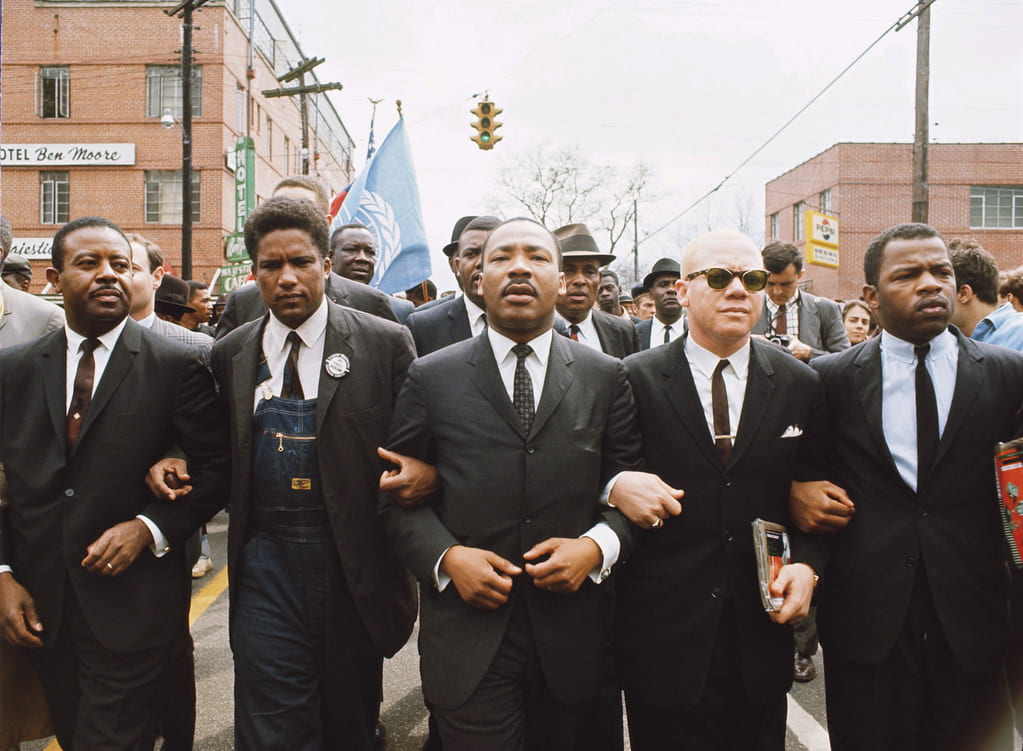
On the afternoon of Friday, Oct. 2, Nate Powell and Andrew Aydin, who collaborated on the graphic novel March with the late congressman and civil rights activist John Lewis, joined Patrick Breen at the Humanities Forum to discuss their book and the legacy of the legendary civil rights activist and congressman. Breen interviewed Aydin and Powell on their collaboration with Lewis, their personal relationship with him, and Lewis’s legacy.
Lewis passed away in July at the age of 80 after a year-long battle with pancreatic cancer, leaving behind a legacy through his civil rights activism and time in Congress.
During the civil rights movement, Lewis was one of the “Big Six” leaders who organized the 1963 March on Washington. In 1965, he led the first of the three Selma to Montgomery marches. In 1986, Lewis was elected to the U.S. House of Representatives, where he served 17 terms as a representative of the state of Georgia.
March, an autobiographical black-and-white graphic novel trilogy about the civil rights movement, was written by Congressman Lewis and Aydin with illustrations by Powell. The trilogy tells the story of the civil rights protests from Lewis’s perspective. At 15-years-old, Lewis was introduced to a 10-cent comic book called Martin Luther King and the Montgomery Story, which had inspired him to get involved in the civil rights movement. He began by attending meetings at universities weekly to discuss nonviolent protests.
Aydin first met John Lewis while on a job interview during Lewis’s reelection campaign. He was hired and worked alongside Lewis for over 13 years. “The book itself is universally readable,” Aydin said while discussing March. “Comics are going to become ingrained in the educational system and the younger generation.”
Aydin discussed the impact the series has had on young people, who make up a big portion of the book’s readers. Since the work is a graphic novel rather than a traditional autobiography, Aydin says, “We need to show our heroes’ humanity through some form of creativity, the young generation needs a creative leap.” March covers the student sit-ins and the impact of the youth on the civil rights movement.
Aydin reflects on the impact the younger generation has on change, saying, “When you talk about student activism, you think of the young people changing the shape of the world; the success of our book was due to 18-25-year-olds.”
Nate Powell, who served as the illustrator of the book, gave his insight on the trilogy and on John Lewis. Lewis had been an inspiration to Powell since his childhood. When asked by Breen how he came to draw these images to convey a message about the civil rights movement, Powell replied that the book was a process of humanizing the storytelling—it required a delicate balance of an accurate and creative account of its history.
Knowing Lewis personally and remembering his legacy, Powell explains that throughout Lewis’s lifetime, he had a rare ferocity and passion for the things he cared about. “The level of intensity he saw in the world and finding a way to fight the injustice he saw throughout society was truly amazing,” said Powell.
On a similar note, Aydin closed by telling the listeners one thing that Lewis always told him: “Once you lose your sense of fear only then can you be free.” This motto has always stuck with Aydin and is worth remembering.
This Humanities Forum commemorated not only the impactful history of the fight for civil rights in the 1960s, but of one the most important figures of the movement. It is important that we remember Lewis not only this year, but every year going forward, for the legacy he has left behind.
Wherefore Art Thou, Scorsese?: Humanities Forum Warns of “Absent History”
by The Cowl Editor on March 5, 2020
News
by Alexandra Huzyk ’20
News Staff
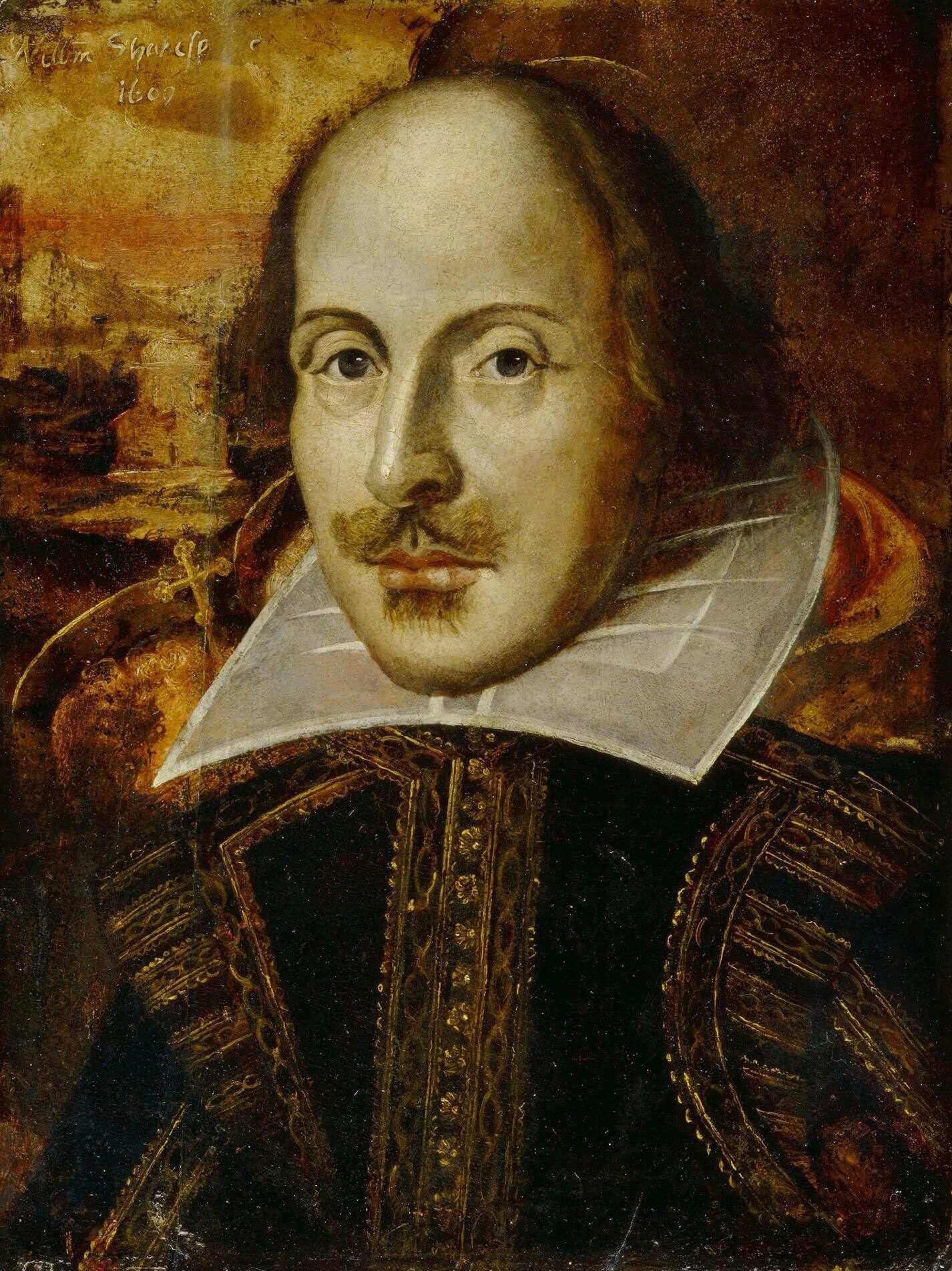
In this past week’s Humanities Forum, Dr. Brian Walsh spoke on “Shakespeare and the Performance of History.” Walsh, a senior lecturer in the arts and sciences writing program at Boston University, is an expert in adaptations of Shakespeare in film, modern drama, and contemporary drama.
The lecture was meant to compliment the Development of Western Civilization program and was the second of three events to be connected to Shakespeare.
Walsh began the lecture by pointing out that modern consumption of Shakespearean drama is largely by studying plays through print. Even if we do see it, it is often a movie or a recording and not an authentic play.
He stated, “Plays don’t tell us how they were performed, just how they were printed.” By only studying the print itself, one loses both the experience of watching a production and the theatrical context that is meant to enhance the storyline.
Walsh emphasized that Shakespeare’s pieces were live events to which Elizabethan audiences would flock. In order to properly understand these works, we must try to imagine the original condition of these plays and how they were meant to be performed for an audience.
Walsh then began to elaborate on the “heightened awareness of the absence of history,” in the 16th century. At this time, there was a break between the past and the present, and a hankering for history. Shakespeare plays grew out of this culture and aimed to bring about a sort of pleasurable historical consciousness cultivated through the theatre.
In the 16th century, Walsh said, “print history reauthorized oral history,” leaving the question of: where does the oral and visual performance fit into this framework? Walsh said “theatere became an alternative vehicle to experience history.”
Shakespearean dramas are typically looked at through a lens of politics, but Walsh said that they should also be looked at within their historical context, for, “history is written as a means to comment on the present.” Moreso, Walsh stressed the necessity of thinking about how, historically, these plays worked, what their affect might be, and what people felt compelling about them on the visceral level.
Walsh drew examples from Richard III, as it “helps our understanding of the pleasurable self-consciousness of a historical play.” In the theater, history is not only produced through human labor and the use of physical space, but is also perceived by the audience. This theatrical sense of the past impacts the audience so that real, historical figures become inseparable from the theatrical connotation attached to them.
In Shakespearean plays, historical moments developed within one play are alluded to in a separate play entirely. This happens within Henry VI, in which Shakespeare references a number of moments in Richard III. This helps to activate the memories of the audience and combine historical and theatrical memories in order to self-consciously create narratives.
Just as historical and theatrical moments merge, Walsh also pointed out how certain actors have become emblematic of specific Shakespearean roles.
This is evident in the painting titled, “David Garrick as Richard III,” which was painted by William Hogarth. The painting features a recognizable actor playing the part of Richard III. It is contextually ambiguous and “visualizes the historical event, but draws upon Shakespeare’s representation.”
Following the conclusion of the lecture, students and faculty were given the opportunity to ask Walsh questions. One student asked if there is a boundary between history’s narrative and commercialization through false representations.
Walsh says that there is danger in changing the narrative and playing with events for concerns of drama. He posed the questions, “Is changing history in this way just a playful intervention? Is there any danger in that?” He brought up examples of Once Upon a Time in Hollywood and The Irishman—popular movies that twist real life events.