
Tag: Iran
Updates and History on US and Iranian Relations
by Victoria Miele ’28 on February 26, 2026
News
Further talks about spiraling tensions between the United States and Iran will take place on Thursday, Feb. 26, in Geneva, Switzerland. When discussing Iran’s nuclear program, Oman’s Foreign Minister Badr Al Busaidi said on X (formerly known as Twitter) that there is a “positive push to go the extra mile towards finalizing the deal.”
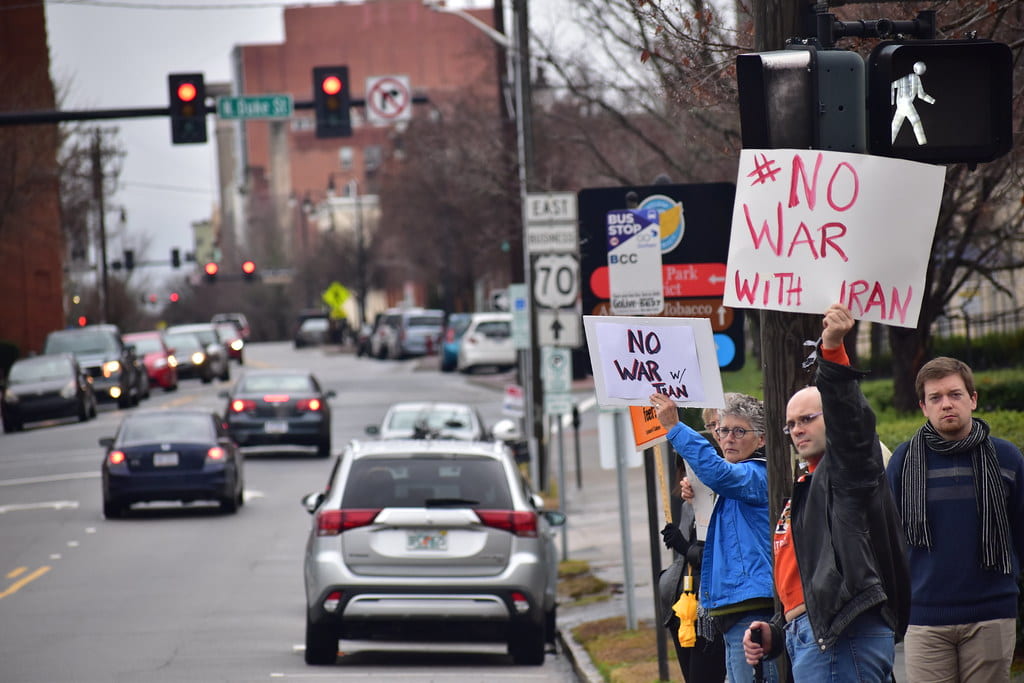
That being said, the U.S. continues to amass military assets in the Middle East, and there are many concerns about a war with Iran.
Since the 20th century, the U.S. and its allies have been concerned with the cultivation of Iran’s nuclear development program. In 1991, during the Persian Gulf war, the U.S. led a coalition of 35 countries to expel Iraqi forces from Kuwait. Iraq is an almost fully landlocked country, and part of the reason it invaded Kuwait was due to its geographical location and access to ports.
Following the war, the U.N. worked hard to prevent Iraq from restarting its weapons of mass destruction programs. During this time, Iran decided to stay neutral in the conflict. However, U.S. officials were concerned that their reason for neutrality was so that they could replace Iraq as the dominant power in the Middle East.
During former President George W. Bush’s 2002 State of the Union address, he described Iran as being part of an “axis of evil” with Iraq and North Korea due to their pursuit of creating WMDs and because they “export terror.” In addition, Bush made sure to mention that the Iranian people were being oppressed by their government. Following this speech, Iranian officials decided to stop meeting with U.S. diplomats who were trying to capture al-Qaeda operatives and combat the Taliban.
Following years of tension, former President Barack Obama called the newly elected Iranian President Hassan Rouhani in September of 2013 to discuss Iran’s nuclear program. This was the most direct contact the countries had since 1979. Two months later, Iran, along with the five permanent members of the U.N. Security Council and Germany, all signed an initial nuclear agreement which provided Iran with sanctions relief. Both Obama and Rouhani were pleased with the agreement, the former saying the deal cut off Iran’s paths to a bomb and the latter calling it a “political victory” for Iran.
In April of 2019, during President Donald Trump’s first term, Trump designated the Islamic Revolutionary Guard Corps, a branch of the Iranian army, as a foreign terrorist organization. Israel’s Prime Minister Benjamin Netanyahu had previously been vocal about wanting this group to be named as such because tensions between his nation and Iran had also been high as they competed for nuclear dominance over the Middle East.
After multiple conflicts over oil tankers in August 2019, a drone attack on an oil facility, and deployment of U.S. troops to help Saudi Arabia oppose Iran, there were protests at the U.S. Embassy in Baghdad. The protestors chanted “Death to America” and demanded that the U.S. withdraw its troops from Iraq.
On Jan. 3, 2020, the U.S. killed Qasem Soleimani, the commander of the IRGC’s elite Quds Force, in a drone strike in Baghdad. Soleimani was known to be one of the most powerful people after Supreme Leader Ali Khamenei in Iran. Besides him, Iraqi militia leader Abu Mahdi al-Muhandis and seven other Iranian and Iraqi nationals were killed. As a result, Iran promised it would no longer abide by restrictions under the nuclear deal. Iran later shot down a Ukrainian passenger plane by mistake, thinking it was a U.S. attack, and then attacked multiple U.S. bases in Iraq, wounding dozens of U.S. and Iraqi personnel.
In 2020, Iran launched its first military satellite, which raised many concerns about Iran’s long-range missile capabilities. Later in the year, Iran’s parliament signed a bill to boost the country’s uranium enrichment to 20 percent, which was significantly higher than was permitted under previous deals and threatened to expel International Atomic Energy Agency inspectors if the sanctions on the banking and oil sectors were not lifted within two months. This was decided after the assassination of Mohsen Fakhrizadeh, who was a top nuclear scientist in Iran. Iran blamed Israel for the assassination, but also accused the U.S. of playing a part.
In March of 2022, the U.S., along with Bahrain, Egypt, Israel, Morocco, and the United Arab Emirates, united under the Negev Forum, which was designed with the framework to deter Iran. The group also met secretly to discuss Iran’s drone and missile capabilities.
In September and October of 2022, women-led protests occurred all over Iran. The protesters denounced Supreme Leader Khamenei and called for an end to the Islamic Republic. In response, the Iranian government suppressed the demonstrators by restricting internet and cellular service, arresting 12,500 people, and killing over 200 protesters. The Biden administration backed the protesters and said nuclear talks were stalled indefinitely due to the protests and Iran’s support of Russia invading Ukraine.
In October 2023, the Iran-backed Palestinian militant group Hamas launched a surprise assault on Israel that killed over 1,300 Israelis. Regional intelligence officials found no immediate evidence that Iran was directly involved with the attack, but some allege that Iran had been providing weapons and training for months prior. Due to the attack, the U.S. and Qatar blocked Iran from accessing the six billion dollars in humanitarian assistance they had previously been giving as a trade for five Iranian-American dual citizens who had been detained in Iran.
When Trump entered office again in 2024, he spoke out against Iran, warning them to stop supporting the Houthis in Yemen, who were openly against Israel. The administration spoke with Iran’s administration regarding Iran’s nuclear program, where Iran continued to claim that their program had peaceful intent.
On June 13, 2025, Israel struck Iran in a surprise attack in an attempt to damage its nuclear facilities. On June 21, Trump issued an overnight attack which hit three of Iran’s atomic centers. Trump called it a “spectacular military success” and a Pentagon spokesperson claimed that the three centers sustained “extremely severe damage.” In response, Iran claimed there would be “everlasting consequences” for the U.S.’s attack.
In January, protests erupted all over Iran as a result of their collapsed currency and the lack of response or action taken by the government. As a result, the government once again issued blackouts on the internet and cell service and there were thousands of deaths and detainments over a two-week period. Trump threatened military action against the Iranian government if the death toll continued to grow. Trump encouraged the protesters to continue, and he issued 25 percent tariffs on any countries doing business with Iran.
The U.S. and Iran are in continuing conversation about the nuclear situation, but the U.S. is considering strikes, and Iran says it is prepared for war.
Iranian Government Enacts Violent Crackdown on Protests
by Erich Rumson ’28 on January 22, 2026
News
Iran has been the subject of worldwide attention for weeks as protests erupted across the country in late December. The demonstrations, which according to the Associated Press began as a response to economic struggles, have been the most significant in the country since the 1979 Iranian Revolution and have led to speculation as to whether the current regime would stay in power. President Trump issued numerous threats to the Iranian leaders in early January that violence against protestors could result in U.S. airstrikes. However, following a violent crackdown on the demonstration resulting in thousands of deaths, the protests appear to have largely stopped, although tensions still remain high in the country.
The recent wave of unrest began primarily as a result of an economic crisis that has intensified in the last few months. The Iranian currency, the rial, has been subject to crippling inflation which has made buying basic necessities such as food and gasoline increasingly difficult. The country’s economic problems have been made worse by sanctions imposed by the U.N. in September in response to Iran continuing its nuclear program, which many fear could lead to Iran developing a nuclear weapon. In response to the crisis, protestors began taking to the streets in late December, calling for everything from economic and political reforms to outright regime change. Many leaders worldwide issued statements supporting the protests, including President Trump, who threatened military action against the Iranian regime in support of the protestors, posting on Truth Social, “Help is on the way.”
The protests continued for weeks and spread to cities across the country. Government security forces initially responded to the protestors with tear gas and nonlethal weapons. However, as the demonstrations intensified during the weekend of Jan. 8, government forces began using lethal force, killing thousands of marchers. Tens of thousands are believed to have been arrested, and the Iranian government has threatened to execute many who were taken into custody. The true scale of the crackdown, including the death toll, is largely unknown, as the Iranian government has shut down internet service, limiting the flow of information out of the country. The violent response from the Iranian regime appears to have largely stopped the protests, at least temporarily, as the streets of the capital city of Tehran have been reportedly quiet since the brutal crackdown.
The violent actions of the Iranian government against their citizens have led to widespread condemnation worldwide. President Trump seriously considered launching retaliatory strikes last Wednesday, and even directed the Pentagon to begin preparations. But with the protests having slowed down and fears of military action leading to a wider conflict, no strike was ordered, at least for the time being. Trump has not ruled out military action if the Iranian government executes protestors in custody, though he has since taken a lighter stance after being told that Iranian leaders have cancelled previously scheduled executions.
Tensions between Iran and the U.S. have existed for decades. Iran is currently run by a theocratic government based on fundamentalist Islamic law and led by Ayatollah Ali Khamenei. Its elections are tightly controlled and the government has long been criticized for human rights violations and its sponsorship of terrorist organizations. The current regime was put in place following the Iranian Revolution in 1979, in which widespread protests fueled by anti-Western sentiment forced its previous leader, Shah Mohammad Reza Pahlavi, into exile. Prior to the Revolution, Iran was considered a major Cold War ally to the U.S., who backed the Shah’s government. The U.S. supported the Shah’s government due to Iran’s proximity to the Soviet Union and the desire to prevent the expansion of communism in the Middle East, as well as Iran’s extensive oil supply. Many Iranians did not support the Shah at this time because they felt that the regime was serving foreign interests, rather than the interests of their own people. Since the Revolution however, relations with the country have been strained, especially in recent years due to its nuclear program. Last June, during what has been referred to as the 12 Day War, the U.S. joined Israel in bombing Iran’s nuclear facilities, causing extensive damage to the country’s capacity to enrich uranium, which is needed for nuclear weapons. The strikes on Iran last June showed major weakness in the current Iranian regime, which is believed to have emboldened protestors calling for a new government.
The current situation in Iran remains rife with uncertainty, as the violent crackdown on protests has likely only increased anti-government sentiment in the country. The economic circumstances sparking the unrest remain unresolved, putting a significant amount of pressure on the Iranian government. Though the protests appear to have largely stopped for the time being, the possibility of further unrest remains very possible, even likely.
Why You Should Care About Iran
by Christina Charie '25 on October 29, 2022
Opinion Editor
Opinion
After a loose lock of hair fell into Mahsa Amini’s face, the Iranian morality police detained the young woman for a dress code violation. She would never be released from custody. Officials claim that the healthy twenty-two-year-old woman died from a heart attack and a subsequent coma, but Amini’s family is skeptical. Amini died while at one of Iran’s reeducation centers, which are known for using physical and psychological torture, according to Dr. Sara Hassani of the Providence College Women’s and Gender Studies Department.
With women taking to the street in the form of protests, they risk facing the same abuse that resulted in Amini’s death. Iranians are removing their hijabs and chopping off their hair. Young girls are yelling at school administrators. Even peaceful protest is met with deadly violence from the Iranian regime.
However, serious misconceptions exist about Iranian women. Dr. Hassani notes that the government still allows women to receive an adequate education, with women outpacing men in many higher education fields. Iranian women are not simply housewives, mothers, and daughters. Despite this, the government irrationally regulates their social norms.
Recently, the Iranian government has severely restricted Internet access within the nation in an attempt to suppress protests. Despite this, photographs and videos are still circulating on social media.
Given the complex gender relations, Iran has given women the tools to speak out against the misogynistic prejudices they face. Women across Iran are calling for change, even if they might die for the cause.
These compromises were not without protest from the theocratic parties. There have been attempts to eliminate the few rights Iranian women have left.
Why is this acceptable to the international community?
Unfortunately, foreign intervention within Iranian domestic politics eventually led to the current oppressive Iranian regime. Both the United States and the United Kingdom helped to decrease the Iranian Parliament’s influence within Iran in 1953 when the nations ousted a democratically elected Prime Minister. The new Iranian monarchy created the secret police system within Iran, which has continued through the 1979 Iranian Revolution into modern times.
The United States and other world powers need to adopt new policies that emphasize human rights protection and economic self-sufficiency for all instead of national interests. Furthermore, the international community is in part to blame for the human rights catastrophe in Iran, even if their actions did not have these intended consequences. Now, nations must apply this reasoning to future cases that arise to prevent more attacks on minority groups. Regime change is not an effective American foreign policy initiative. Therefore, the United States must shift its focus towards preserving human rights, promoting economic prosperity, and forming alliances with governments that uphold the will of the people.
Even though women actively participated in the 1979 Iranian Revolution, the outcomes for gender reform were less than ideal. In fact, women were crucial to the movement’s success. Once political groups competed for power, the theocratic and clerical parties emerged dominant. In fact, Margaret Atwood’s The Handmaid’s Tale is inspired by the 1979 Iranian Revolution. Many of the social restrictions Atwood emphasizes in her novel are like conditions for Iranian women: extreme dress codes, strict policing, and no tolerance for dissent. While Atwood’s novel is not an exact historical account, it does provide a point of reference for Americans.
Potentially the most chilling aspect of Atwood’s novel is that it conceptualizes a dystopian future for the United States that parallels current conditions in Iran. Americans do not even realize the parallels that already exist.
Severe gender discrimination might seem unimaginable in the United States. Dr. Hassani notes, however, that striking similarities exist between the Iranian Guardian Council and the American Supreme Court. Both have the power to veto legislation, which can be used to further oppress the masses. The Guardian Council blocks any reform-based legislation, even if it is highly favored by the Iranian people. The extreme political power combined with an extreme religious agenda contributes to the Guardian Council’s oppression. Americans should look to Iran when considering how personal religious convictions influence the Supreme Court. The outcomes are certainly dangerous.
The circumstances tackle the eternal question regarding the role of government in social issues. Given the spark in protests, Americans need to reconsider the restrictions legislation places upon various identity groups. Discrimination can occur anywhere. Iranian women supported revolutions, but they were neglected in the end. Women can speak out, but it does not mean society will listen.
To avoid another human rights crisis, everyone must stay informed about the situation and listen when any minority group speaks up for their rights. Everyone has a responsibility to remain open-minded in the fight for unalienable rights.
Read a news article or watch a video. Iranian women are risking their lives for freedom. If one values the liberties granted by the United States government, one should support Iranian women’s struggle for freedom. Standing in solidarity is not a major inconvenience considering the deadly situation. When another video from Iran appears in your feed, stop scrolling and take a moment to support Iranian women.
Bursting the PC Bubble: Iran Admits Fault, Quashes Tehran Protests
by The Cowl Editor on January 16, 2020
News
Eileen Cooney ’23
Assistant News Editor
On Wednesday January 8, a Ukranian International Airlines Boeing 737-800 crashed just before dawn near Tehran, Iran.
Shortly after takeoff the airplane, headed for the Ukranian capital of Kyiv, burst into flames. Of the 176 people on board, no one survived. Sixty-three of the passengers were Canadians, many students or faculty of the University of Alberta in Edmonton. Citizens of Afghanistan, Iran, Ukraine, Sweden, and the United Kingdom were also on board.
The Canadian Prime Minister Justin Trudeau expressed his anger with Iran and said that Canada will not rest until there is a full investigation into the events that transpired.
The Revolutionary Guard has taken full responsibility for the plane crash, claiming that shooting down the plane with a missle was a mistake. This admission of guilt comes after Iranian officials initially denied that the plane was shot down.
The crash comes in the wake of increased tensions between the United States and Iran. The tensions began last week when the United States assassinated Iranian military general Qassem Soleimani, and Iran responded by launching attacks on US military bases.
Brig-Gen Amir Ali Hajizadeh, the Revolutionary Guards’ aerospace commander, says that the firing of a missile was a mistake and they will work to upgrade their military technology to prevent such events from occurring again in the future.
The families of the victims mourn the loss of their loved ones and are angered that these innocent lives were lost because of foreign conflict.
Hundreds of protestors have stormed the streets of the Iranian capital of Tehran to vent their frustration with Iranian officials. Protestors want Iranian officials involved in the tragic incident to be held accountable for their actions.
In the wake of such protests, violence has broken out, and some videos on social media appear to show tear gas being fired. In response, Iranian President Hassan Rouhani released a statement vowing that those at fault will be prosecuted and brought to justice.
President Trump has praised the protestors, and Secretary of State Mike Pompeo has released a statement saying that the United States hears the Iranians’ frustration and that they deserve a “better future.”
These protests in Tehran follow some of Iran’s most violent protests in history back in November in response to economic sanctions that resulted in a drop in fuel prices.
Many were arrested as the violence broke out, and the government even shut down the country’s internet in attempts to curb the protests.