
Tag: immigration
A Conversation on the State of Immigration and Courses Offered
by Sarah McCall ’26 on February 26, 2026
News
I recently had the opportunity to interview Dr. Kara Cebulko, a professor in the Sociology and Anthropology Department at Providence College. Dr. Cebulko has worked at PC since 2009, and most of her research centers around international immigration and 1.5-generation Brazilian immigrants in Boston. She is currently Interim Department Chair of the Global Studies Department and teaches courses with a focus on the construction of borders and the greater impacts and inequalities.
Dr. Cebulko’s interest in immigration started during a trip to the Amazon Rainforest in college. She described this experience as “transformative” and cited it as the origin point for her post-graduate research project. This research centered around Brazilian internal migration to the Amazon region. As she spent more time in Brazil, she began to switch her focus to international immigration. This research started in 2006 and was her primary focus for 15 years.
Recently, her research has shifted to focus on migration as a human right. Migration as a human right includes the right to migrate, the right to stay, the impact of global tourism spaces on a community, and the belonging and identity of immigrants in both their adopted countries and countries of origin.
Dr. Cebulko’s research of 1.5-generation Brazilian immigrants in Boston followed a group of 18–24 year olds for 15 years. It documented how they navigated the world as emerging adults in a culture where they were forced to grapple with their race, gender, and legal status. What made this group of individuals so important to study was their classification as white in Brazil, but as a racially marginalized group in the United States. Additionally, many of those interviewed were undocumented or had a complicated legal status as U.S. residents.
Since 2011, Dr. Cebulko has taken a group of students to the U.S. and Mexico border, Tijuana, and San Diego. Through a Feinstein Institute partnership with Esperanza International, which predates Dr. Cebulko’s involvement, students build homes through a community empowerment model and to see how people on the ground are building community.
This experience has developed into a course offered every spring semester; GST 371: Globalization, Borders, and Human Rights. This is an application-based course with a wide variety of majors and disciplines enrolled. Dr. Cebulko highlights the importance of this experience by saying students can “learn more in one week through experience in Tijuana than in class. To see the wall, to smell the ocean, to hear helicopters, to meet the people. That cannot be taught in a classroom.”
Shannon Kelly ’26, a student who took Dr. Cebulko’s course in spring 2023, said this about her experience: “The people I was able to meet, the collective resistance that was exemplified through the art that we saw, and both the connections and conversations will remain with me forever.” This is the experience that Dr. Cebulko wants to encourage through GST 371.
When discussing the important themes of the course, Dr. Cebulko highlighted humanity and its association with the mission of PC. Through this course, students develop an understanding of the tangible impact that policy has on a community. This experience also encourages people to care for other communities. Caring, according to Dr. Cebulko, is the key to building communities.
Dr. Cebulko also referenced the current Immigration and Customs Enforcement actions and emphasized that these actions are not new, but the scale, intensity, and use of social media are making things scarier. These horrors are not new, Dr. Cebulko said, but there is always resistance. Right now, there is underground mutual aid forming in Minnesota and communities are coming together across the country to protest. At PC, Dr. Cebulko recommended to join organizations such as Providence Immigration Rights Coalition, take more classes centered around the topic, and get to know the Smith Hill residents.
Providence Says “ICE Out”
by Sarah McCall ’26 on February 5, 2026
News
Thousands Gather in Protest at RI State Capitol
On Friday, Jan. 30, thousands of people gathered at the Rhode Island State House for an ICE Out National Day of Action protest. The streets were filled with high school students, college students, families, Providence community members, and Rhode Island residents. Protesters had signs with phrases like “Abolish ICE,” “We Love Our Neighbors,” “Clear the snow and melt the ICE,” and “Students Demand Justice.” The signs ranged from cardboard boxes with sharpied words to well drawn political cartoons. Some protestors used old cereal boxes and buckets, and one little girl even assembled her sign with two pieces of construction paper and a large stick she found.
I had the opportunity to talk to her mother, who said that she took her daughter and son out of school that day to attend the protest. She explained her reasoning for bringing her young kids with her, saying that she always encourages them to fight for what is right and that she couldn’t sit back. When I asked why she felt it was important to show up, she said, “We are handing this world off to our kids, and we need to make sure it is a safe world for them.” She also told me that her son wore a Spiderman mask so that he could “feel like a hero.” Her daughter also felt like a hero, using the large stick to raise her sign above the crowd. It read “People are Dying” and “Stop Doing This,” with an angry face that she had drawn. These three protestors, along with thousands of others, marched through the city of Providence in hopes of making a change and uniting our community.
There was a significant student presence at the protest. Hundreds of high school and middle school students in Providence organized a walkout and met the protesters at the State House. The students chanted as they walked to the State House, emphasizing that life cannot go on as normal with Immigration and Customs Enforcement agents still on our streets. Many of their signs referenced the walkout, saying that they missed a lesson to teach others one and “Students Say ICE Out.”
There were volunteers walking around the protest providing information about different organizations. I had the opportunity to speak with Natalie, a volunteer with the Rhode Island Deportation Defense Line. She explained the program as a community effort to report ICE activity and keep ICE out of the area. With this Defense Line, community members can call (401) 675-1414 to report any unusual activity or potential ICE operations. This call will then be verified by the Rhode Island Deportation Defense Line before it is sent out to an ICE Watch Alert Channel WhatsApp. As I talked with Natalie, I asked why she thought it was important to be at the protest. She said, “We are the people who keep ourselves safe. We need to do our part as a community.”
Instagram accounts like @pvdstudentunion, @dare.pvd, @amornetwork, and @pslrhodeisland consistently post about protests and ways to get involved locally.
State Leaders React to the Presence of ICE in their Communities
by Madison Benoit ‘29 on February 5, 2026
News
As the country reacts to the recent Immigration and Customs Enforcement related shootings in Minneapolis, MN, many states have begun to make changes to restrict ICE activities. In Massachusetts, Governor Maura Healey announced new regulations and has made several legislative proposals. One of these proposals includes an executive order that would stop the state from entering a new cooperation agreement with ICE. The same order also prevents federal agents from making civil arrests in non-public areas of state-owned buildings. Governor Healy has also filed legislation that would prevent ICE agents from entering protected areas, including schools, hospitals, courthouses, and places of worship. These actions are intended to prevent ICE from trampling the rights of Americans and committing unlawful actions.
In New York, Governor Kathy Hochul has shown support for banning formal cooperation agreements with ICE. This is especially notable in New York, as the state currently has 11 municipalities that have cooperation agreements with the agency. Hochul has emphasized that there is no need for New York police officers to assist with civil immigration enforcement. She was supported at the conference by Police Commissioner Jessica Tisch, the Police Chief of Albany, Brendan Cox, and four of the five New York City district Attorneys.
The Department of Homeland Security has reacted to this policy with Assistant Secretary Tricia McLaughlin stating, “Our partnerships with state and local law enforcement are key to removing criminal illegal aliens including murderers, rapists, pedophiles, gang members, and terrorists from American communities.” Hochul has directly stated that the new legislation proposal is a result of the murders of Reneé Good and Alex Pretti, who were both shot by ICE officers in Minneapolis.
Similar moves to ban cooperation agreements have been taken up in several other states, including Maryland, Illinois, New Jersey, and others. What exactly does this mean?
The cooperation agreements are known as a 287(g). Generally, this means that local law enforcement officials will check the immigration status of individuals they have already taken into custody. This is done by deputized local officers who will not only check their immigration status, but also have the power to begin the removal process by recommending either voluntary departure or a formal hearing. A voluntary removal would prevent the 5–10-year ban from entering the U.S. again. Although the 287(g) can vary, this is the most common agreement type. By banning these agreements, states are looking to limit the power of ICE while maintaining a strong separation between ICE and their local law enforcement.
Ed Column
by Sarah McCall ’26 on January 28, 2026
Opinion
Happy spring semester! I hope everyone had a restful break and a good start to the semester. I know that I usually keep my ed columns pretty silly and focus on whatever my current random thoughts are, but unfortunately, due to the state of the world, I have had less time to think about these trivial things. As a white college student, I hold a significant amount of privilege in this country, which protects me from having to face most of the cruelty happening around us. However, that does not mean that this cruelty does not exist. Every day, we hear more and more stories of children being ripped apart from their parents, children being used as bait by law enforcement, people being shot and killed for disagreeing with the government, and people being racially profiled and detained. The world we are living in is not normal, and it is completely inhumane.
I graduate in May, and at this point, I should be concerned about where I will get a job, but instead, I am worried about the state of our country. The federal government has completely locked the state of Minnesota out of the investigation into the murder of Alex Pretti. The Trump Administration is pushing a narrative that the Immigration and Customs Enforcement agents who murdered Reneé Good and Pretti were acting out of self defense, which is actively disputed by both the governor of Minnesota and the mayor of Minneapolis, as well as by countless witnesses. The administration of President Donald Trump is consolidating the authority of government to the federal level, discouraging independent thought and media, using brute force against citizens, and tearing apart communities. I feel immense outrage at what the administration has done and most likely will continue to do. There have been countless anti-ICE protests throughout the country, including many in Providence and Rhode Island. There is a protest at the Rhode Island State House on Friday, Jan. 30, at 2 p.m., and I encourage everyone to attend and make their voices heard.
America is a nation of immigrants, and our country, just like any other, is unable to function without immigration. Our country is also not able to function when thousands of hardworking members of American society are inhumanely ripped from their communities. Or if the federal government continues to undermine the legal and judicial systems that form the basis of our democratic society. Or if government officials attempt to radicalize the population into hatred of different demographics. Or if people are murdered in broad daylight by a militarized police force. I can only imagine where our country is headed and what else is happening behind closed doors.
As I approach the end of my college career, I am hopeful for the opportunities I may encounter, but I am also reflecting on the treatment of members of my community. With that, I wish everyone a good rest of the semester and a better world for all.
Supreme Court’s Decision on Immigration
by Shannon Kelly ’26 on September 18, 2025
News
On Monday, Sept. 8, the Supreme Court overturned a federal judge’s ruling that had found immigration enforcement agents were engaging in discrimination based on race, language, location, and occupation in a 6–3 decision. In July, Judge Frimpong of Los Angeles ruled that federal agents were likely infringing upon the Fourth Amendment when making stops. With this ruling overturned, federal agents under the guise of ICE and DHS are permitted to stop people based on parts of their identity. This includes race, ethnicity, language, possible accents, and their presence at specific sites of work.
This case has shifted national attention to the Fourth Amendment, which protects the right of the people to not be unreasonably searched and seized by the government. This ruling has brought an intense amount of fear across the United States, specifically in cities like Los Angeles, Chicago, and New York. This ruling from the Supreme Court also comes at a time of heightened anxiety regarding the Trump Administration’s recent attempt at a federal takeover of our nation’s capital, Washington, D.C.
Since June, armed and masked federal agents have utilized roving patrols to carry out sweeps of immigrants who may lack proper documentation. This overturning by the Supreme Court was concurred by Justice Brett Kavanaugh, who stated that immigration officers must be able to use their experience to stop suspected undocumented immigrants. Justice Sonia Sotomayor wrote that, “Because this is unconscionably irreconcilable with our nation’s constitutional guarantees, I dissent.”
This case reflects the current political leanings of the 6–3 conservative majority of the Supreme Court. All six of the conservative Supreme Court Justices upheld that the Constitution likely allows for federal immigration agents to use blunter tactics when selecting suspected undocumented immigrants to interrogate. All three liberal Justices voted in dissent of the bill, ultimately pointing out the polarization in the Supreme Court based on the political party of which they are a part.
This case symbolizes the division, the collective inability to engage in uncomfortable conversation, and the constant dehumanization of those who have been othered that currently define the state of our nation. Many feel unsafe at their place of work and now risk being targeted for the parts of themselves that they should take pride in, rather than feel the need to hide. With immigration being one of the most controversial topics at this moment in time, we must be able to engage in meaningful dialogue that recognizes the humanity, dignity, and care that all people, regardless of immigration status, are worthy of.
Immigration and Collective Amnesia: A Reflection on Last Week’s Lecture by Dr. Jessica Barbato Jackson
by David Salzillo Jr. '24 on November 3, 2022
Opinion Staff
Editorial Statements
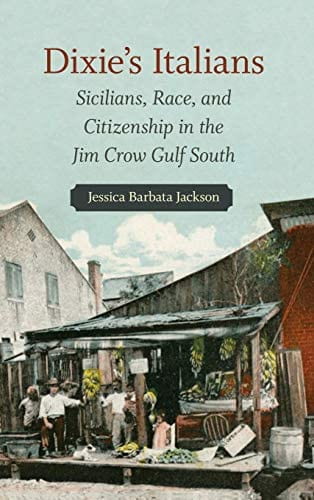
The early history of immigration to the United States is not the story of the melting pot, but the vortex. In our American history courses, we often hear about the endless cycling of this vortex. It starts with a group of immigrants that come to America for the promise of freedom, independence, and a better life, and it ends with the descendants of those same immigrants seeking to deny others the same opportunities. Why? Because the vortex sucked them in and caused them to embrace the very same prejudices that once justified discrimination against their ancestors. It is a remarkable cycle of forgetfulness, and it has not died out in the 21st century. After all, weren’t the Irish once looked down upon as primitive papists and ape-like Thomas Nast caricatures? Weren’t the Italians once considered a horde of mafiosos and stupid peasants? And aren’t immigrants today supposedly invading our country with their drugs, their crime, and their rapists?
How do we fail to see the vortex at work? Does the irony escape us? How else could Stephen Miller, the descendant of Eastern European Jewish immigrants, be the founder of a group that warns of “a giant flood” of immigrants? I must ask: is this giant flood the same flood that brought Miller’s family to our shores?
Now, I am not trying to set aside the practical question of what to do about illegal immigration. But we must put this rhetoric in perspective: groups like Mr. Miller’s are calling for restrictions on illegal and legal immigration. Why? Well, the rhetoric, as it always has, speaks for itself. Miller’s concern is not with stopping crime, nor achieving both a compassionate immigration system and an orderly one: it is about swatting off “the horde”—as if migrants were a bunch of vultures waiting to feast on America’s carcass. This method of dealing with immigration, first of all, neglects the practical consequences of not welcoming more immigrants. Japan is the perfect example of this: its restrictive immigration policies have led to a shrinking and aging population. America’s politicians need not make the same mistakes. Instead, they must realize that these floods that Miller and his ilk complain about are like the annual floods of the Nile: they are necessary to “enrich the soil.”
But I digress. The repel the horde mentality neglects to define who “the horde” consists of. This is where the story of Italian immigrants in the South is particularly instructive. In Dr. Barbata Jackson’s book Dixie’s Italians, she describes how Italian immigrants and Italian-Americans were—to New Orleans residents and those across the rest of the South—an invasive foreign species. They faced mass lynchings and constant suspicions about their abilities to be true American citizens. Does all this sound familiar? It should. Late 19th and early 20th century America had a more elaborate racial hierarchy than 21st century America, with ethnic whites like Italians and others of the Mediterranean race placed lower on this racial hierarchy than other whites.
However, those of Southern Italian descent were still whites. Official U.S. records categorized them so, and thus gave them legal rights denied to non-whites. These legal privileges are undeniable and distinguish Italian-Americans from other historically disadvantaged groups in America. And the most violent forms of discrimination against Italian-Americans, while no less abhorrent than violence against people of other races and ethnicities, did not last far beyond the first few decades of the 20th century. As bad as anti-Italianism was, it was only a small taste of the discrimination that others confronted.
But that will never justify the existence of the vortex. Italian-Americans should know better than to imitate the behavior of those that discriminated against their ancestors. For a culture centered around the family, what better way to honor them than by preventing others from forgetting about their struggle for acceptance? To do that, and to stop the vortex, Americans must learn to see not “the horde,” but “the immigrant.”
The Butterfly Effect of Immigration: PC Hosts Providence Immigrant Rights Coalition
by The Cowl Editor on March 5, 2020
News

by Sienna Strickland ’22
News Staff
What does an immigrant have in common with a butterfly? Christina Roca ‘21, vice president of the Providence Immigrant Rights Coalition, explains the organization’s inspiration behind the name they chose for their most recent event.
“Our public relations, Jackie Lopez ‘22, came up with the brilliant idea of The Butterfly Project. The butterfly is the symbol used for the immigrant rights movement,” Roca says.
Like the millions of immigrants and migrant workers that travel seasonally to the United States seeking a better life, “tens of millions of monarch butterflies migrate up to 3,000 miles from the Northeastern U.S. and Canada down to their wintering grounds in Central Mexico to escape the frosts of winter.”
Both the immigrant and the butterfly flee from their harsh climates to arrive at a warmer destination—one where they can live. Despite the U.S being an international beacon of light for those seeking a better life, immigrants do not always receive fair treatment upon arrival.
Gisell Rodriguez ‘20, president of the organization, acknowledges the complicated nature of the solutions to neglected immigrants’ rights. She says, “There are multiple layers to addressing this issue; there are changes that need to be made at many different levels: nationally, systemically, ideologically, and even institutionally.” Although, complicated, the issue of immigrants rights is still solvable. In fact, as Rodriguez elaborates, there are tangible ways that we can attack the problem in our very own backyard.
On college campuses, she says, “There should be increased representation and assured reliance that there are faculty members, counseling center staff, safety and security members, etc., that are allies. Students should feel comfortable disclosing information about their experience if need be. Everyone should have the ability to feel safety and belonging.”
Rodriguez is not alone in aiming to attack the problem from a grassroots approach. Roca emphasizes the importance of having resources for immigrants and allies on the Providence College campus as well, saying, “There needs to be an improvement in resources offered at the College. The only resource the campus has as of right now is an immigration liaison, run by Kara Cebulko, which was instituted just this past December.”
Sean Richardson ‘20, presenter at the event, says we must “focus on establishing the community as a whole and recognizing that this community exists. Because of the political implications, the students we seek to help are often pushed to the side or are forced to keep their identity hidden.”
Fostering an environment of awareness and open discussion, allowing these students to come out of hiding and embrace their identities, was PIRC’s goal at The Butterfly Project, and is their goal in general. The Providence Immigrant Rights Coalition is an organization meant to foster safe, open, and honest discussions about concerning and sensitive topics.
Roca summarizes PIRC’S mission statement, saying, “PIRC is meant to ensure there is a space on campus for students to talk about the current immigration system and policies surrounding it, and more importantly, provide a safe space for students that may be impacted or are concerned about the current system; including and not limited to, undocumented students, students under Temporary Protected Status (TPS) or Deferred Action for Childhood Arrivals (DACA), first and second generation immigrants, students from mixed-status family, and allies,” she details.
Richardson was a crucial part of the event. He led a workshop for students to participate in and shared some of his research in the process. “[Sean] has been conducting research on resources for students with immigrant backgrounds—whether it be first generation or second generation—who are either protected under DACA or TPS, or come from mixed-status families,” Rodriguez describes. Armed with an arsenal of new information, students were able to engage meaningfully with one another and the material. Richardson explains the composition of the event, saying, “It was set up as a workshop where people could have discussions on the topics but also have time to have a critical discussion on what it means to be an ally to this community.”
The Butterfly Project was a huge hit, so much so there were issues with fitting all of the attendees into one room. Roca describes the impressive attendance, saying, “We had the biggest turnout out of all the events we had held so far. Usually, we see the same people attend our events and meetings, but this time we had a different turnout of about 60 people trying to fit in the tiny Moore 118 classroom, which was amusing to witness.”
Although a definitive success, the board hopes that this is just the beginning. “We still need more support and representation from the PC community because the issues cannot be left in the hands of immigrant students themselves,” says Roca. “Hopefully we can create a domino effect where people learn from each other about how we can help marginalized populations.”
How can we all help? Rodriguez has an answer. “Learning and educating ourselves is crucial. The media and other things we tend to hear perpetuate stereotypes and stigmas; it is important to look these topics from all perspectives and to address individuals instead of generalizations. I encourage allies to engage in conversations, ask questions, show up to meetings or events, and show support,” she says.
If interested in becoming an ally, or if in need of support yourself, PIRC meetings are biweekly on Wednesdays from 6:30-7:30 p.m. in Moore 118. Their next event called #IStandWithImmigrants, a photoshoot in service of solidarity, takes place on March 27 in the Slavin fishbowl from 3:30-5 p.m.