
Tag: Star Wars
“Rebellions Are Built On Hope”
by Sophia Caneira ’29 on February 26, 2026
A&E - Film & TV
A Review of Disney’s Andor
I can’t say I love the majority of the newer Star Wars projects. Like many fans, I grew up watching the original trilogy, but when The Force Awakens (2015) came out, I was only eight years old. Originally, I loved the film, and to this day it remains my favorite of the sequels, but calling it my favorite may be fairly generous. As The Last Jedi (2017) and The Rise of Skywalker (2019) rolled out, I started to realize that the new films were nowhere near the caliber of the originals. While they were entertaining to watch, I just wasn’t impressed. I liked the actors that were cast, but the writing felt lazy and unbelievable—even for a universe so iconically unpredictable by nature. The Force could suddenly do anything: bring a person back to life, telepathically connect people, you name it. This lack of limits resulted in the Force no longer feeling so special and magical. Two moments—Han Solo’s death in The Force Awakens and Luke Skywalker’s unwillingness to aid the Resistance in The Last Jedi—felt especially and entirely out of character.
One Star Wars project has caught my eye: Rogue One (2016). Rogue One fills in the gap between the prequel films and the original trilogy by telling the story of the Rebellion’s acquisition of the infamous Death Star plans featured in A New Hope (1977). It stars Felicity Jones, Diego Luna, Mads Mikkelsen, Ben Mendelsohn, and others—all brilliant actors who fulfill their roles perfectly. The movie explores themes of self-sacrifice, familial love, and hope. After all, as several characters repeat in the film, “Rebellions are built on hope.”
And then in 2022 came Andor.
Andor tells the story of one of the main characters from Rogue One, Cassian Andor (played by Luna). Each of the 24 episodes explore Cassian’s hidden past, his complicated morals, and ultimately his journey to joining the Rebel Alliance. In Rogue One, audiences saw only a glimpse of Cassian’s character. Andor, in contrast, places him centerstage, therefore helping to answer many preexisting questions about his mysterious role in the film. Without giving too much away, the plot of the series lends itself to a commentary on political power, authority, and corruption. While at times quite political, it is also highly complex, intentional, and emotional. The score for the series, composed by Nicholas Britell (Season One) and Brandon Roberts (Season Two), is a huge component of the emotional weight of this show. The series even teases the origin of the phrase, “Rebellions are built on hope”—one of my favorite moments.
Andor isn’t perfect, but it’s pretty close. I admit the first couple of episodes in each season felt a little slow. In fact, my dad and I tried to start Andor almost a year ago and only made it through the first episode. On the second try, we finally got hooked and watched the show all the way through. If you can persevere through the first few episodes, you won’t regret it.
Again, while I’m not a huge fan of some of Disney’s new Star Wars endeavors, others are worth a watch. The series The Mandalorian is also highly enjoyable. If you’re looking for a new, deeply thought-provoking, and poignant show to binge-watch, I would suggest trying Andor. Andor is one of the few projects that gives me a spark of hope for the future of franchise films.And whether you have or haven’t already seen Rogue One, you’ll definitely want to give it a watch after finishing Andor. Luna himself was quoted as saying, “You’re going to see Rogue One differently after Andor.”
Why We Need the Dark Side: The Politics of Star Wars
by Lucy Droege ’26 on November 20, 2025
A&E - Film & TV
As many have written about and discussed over the years, the Star Wars franchise is a story (albeit long and winding) about politics. Like all good political narratives, there is drama, love, disagreement, deception, civil war, and countless limbs chopped off. As a political science major watching the Star Wars series for the first time, the line that stopped me in my tracks was Padmé’s famous line in Star Wars: Episode III – Revenge of the Sith (2005), “So this is how liberty dies, with thunderous applause.” That’s not really something you throw in lightly in an action film set in outer space. However, the international context in which the Star Wars movies were released explains many of the political nuances and portrayals in the films. The Vietnam War, the Cold War, and American politics of the early 2000s significantly influence the themes throughout the films. What I failed to recognize before watching the movies is just how closely tied the series is to politics back here on Earth.
The setting of Star Wars in an intergalactic system of order makes it easy for the viewer to sit back and watch the series as an action-packed escape from the very real politics on Earth. Despite the futuristic droids, clones, and other extraterrestrial creatures that make up the Star Wars universe, there still remains familiar political systems and intergalactic agreements in order for this universe to function. The breakdown of these agreements that make up the democratic order governing the Star Wars universe is the driving plot point of the series. In Revenge of the Sith, the democracy of the Republic is less forcibly overthrown than its destruction is willingly voted in favor of. With democratic backsliding back in vogue recently, the breakdown of the democratic experiment in Star Wars hits close to home. Much like in the real world, a state of emergency (whether real or manufactured), where states and individuals with power feel threatened, creates an opportunity to consolidate power in the hands of a select few. This shiny and dangling allure of unlimited power is often impossible not to snatch up. The dark side of the Force and of politics will always be an enticing option. Greed for power, money, recognition, and respect is inside every single lifeform. The alternative, to pursue the common good no matter the personal sacrifice, will always be the most honorable choice. The temptation of the dark side is precisely what makes the pursuit of goodness so admirable both in Star Wars and in reality.
Tiffany and Earl
by The Cowl Editor on November 2, 2017
Portfolio
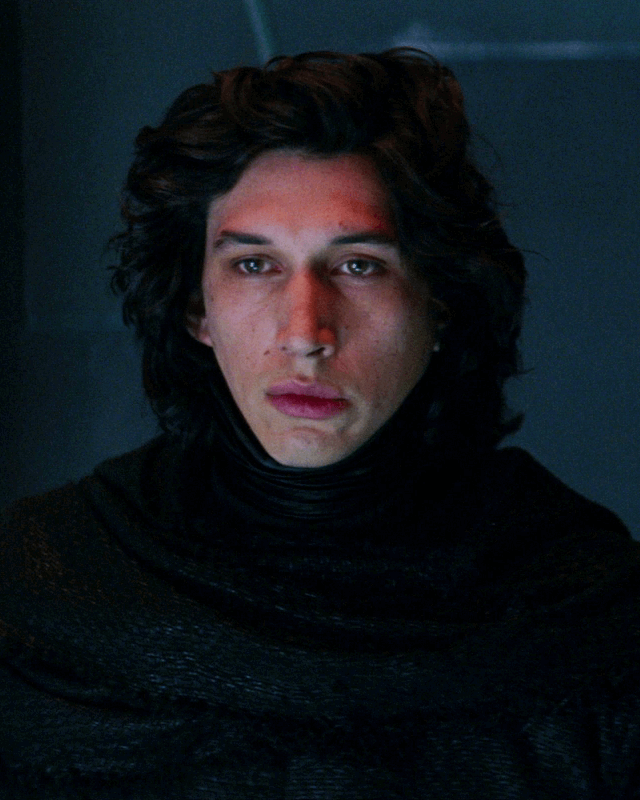
Dear Tiff and Earl,
Kylo Ren: hot or not?
Sincerely,
Definitely Not Finn
Dear Finn,
Ya know, if Kylo Ren was a girl, I would call him a “butter face,” or “but her face.” His body is so hot. Like sooooo hot. His face is… eh. So I guess he’s a “but his face?” Can we make that a thing?
Cause man, would I be into him…but I would need to close my eyes when I was looking at his face.
All the best,
Tiff
Dear Traitor,
I’m leaning towards “not.” I guess I’m not that Force sensitive, or whatever. I’m a family man, so I wasn’t very excited when he killed his own father. I will admit, I have considered killing my own father. He doesn’t understand my sarcastic quest to answer the most pressing questions at Providence College. Also, he makes such a big deal over dog gender. I don’t care if your corgi is a male or female as long as I get to hug it.
Earl
*This is a satirical column that does not reflect the views of Providence College or The Cowl.