
Tag: media
Providence College Students Respond to Government Shutdown
by Kaelynd Brouillette ’29 on October 23, 2025
News - Campus
If you have scrolled TikTok or Instagram lately or turned on the news, you’ve probably seen the panic surrounding the current government shutdown. Personally, I was scared. When I heard the shutdown was actually happening, I was worried about my flight home. Was it going to be cancelled or delayed? Should I get to the airport extra early in case the TSA takes forever? On Oct. 9, I flew out of Logan International in Boston to Syracuse, NY, and business was operating as normal. TSA took 10 minutes, and my flight took off on time. I prepared for the absolute worst going in there, but I was surprised by the relatively normal experience. After all, TSA workers and air traffic controllers are federal employees who are affected by the shutdown. The situation left me thinking that maybe this is what America feels like right now—everything looks normal on the outside, but beneath, our system is cracking. That realization made me wonder how much the people around me actually understand what’s going on, not just at the airport, but across the country. To find this information out, I sent out a student-run survey regarding Providence College students’ perceptions of the shutdown.
PC students’ reactions show how younger generations perceive government dysfunctions from the outside looking in. While most aren’t directly affected, many recognize the shutdown as a symptom of deeper political failure. Their voices reveal both frustration with leaders and a desire for better civic understanding, as only 14.8 percent of PC student respondents said they felt truly informed about the shutdown. Most reported that they get their news from social media, such as TikTok and Instagram, with only some getting it directly from well-known news sources. This highlights a broader issue: young people are surrounded by political content on every platform, and lack context or real, trustworthy explanations. Social media, although helpful in some capacity, is not an entirely reliable source of information regarding obtaining facts on the current state of our government, containing often biased and heavily skewed “information.”
I also found it interesting that 52 percent of respondents said they were not personally affected by the shutdown in any capacity, and 74.1 percent said they only felt somewhat connected to the events happening in D.C., although several cited indirect consequences, such as their family and ROTC members being furloughed, as well as some stating they did experience TSA/flight struggles. This data makes it clear that students see through political dysfunction, yet struggle to feel connected to government processes. It is important to note that although we, as a generation, find it difficult to feel impacted by national government events such as this shutdown, we recognize the implications of it and see that it has real-world effects in society. One anonymous student stated, “We feel isolated in our own little world when we’re on campus, but there’s so much going on around us that is important to learn.” This quote really stuck with me because it holds true that when we are on campus, we do feel like we’re in our own little world, and although there are such frightening government events happening in our country, we don’t feel affected by them. Therefore, it is incredibly important that college students make any effort to learn about and care about the current state of the government. Although we don’t feel the direct effects, our society as a whole is facing the consequences.
Through my collection of data, students also made it clear that the shutdown is not a good look for our government, with 74.1 percent of respondents saying that this has changed the way they see our government and its leaders for the worse. Two anonymous students expressed frustration with the way our administration is handling the shutdown, stating “The propaganda that has been plastered all over official government websites, calling this a ‘Democrat shutdown’ has worsened my feelings towards the Trump Administration,” with another stating “Misinformation and the control of news and media I feel is at an all time high attempting to divide the country with Democrat versus Republican without being genuine to the inherent ideals of the parties.” These responses reflect bipartisan frustration, as students are annoyed with the rhetoric on both sides of the aisle, and, from what I have gathered, believe it is important for both sides to work together to solve the bigger issue at hand.
While many Americans view the shutdown as a distant political event, federal employees are experiencing a direct disruption of their livelihoods. I conducted an interview with an Environmental Project Manager who has worked for the federal government for 10 years now, and he gave us an inside glimpse as to what the work environment is currently like. He describes his frustration with seeing “highly respected people in their fields,” being scientists and engineers, labeled to be nonessential by “people unfamiliar with their work.” This label, he explains, is “demeaning to someone who takes pride in the work they do.” For these workers, it’s not just about a paycheck, but rather being told their contribution to society suddenly does not matter. The shutdown reduces public service to a checklist of expendability, reflecting a broader cultural disregard for labor that does not produce an immediate political or financial gain. When asked about the overall morale in his workplace, he stated, “Disruptions such as this shut down and callous decision making created a negative environment locally and I’m sure through the federal workforce.” Imagine going to work knowing your role is “essential,” yet your paycheck is suspended and some of your colleagues have been determined “nonessential.” This situation therefore corrodes morale and creates resentment towards leadership that appears indifferent to human cost. The government relies on the expertise of people like him to keep important systems running, but refuses to compensate him for his contributions in real time. He notes that essential workers must “adapt, find a solution and press forward” despite missing staff support and resources, showing that it is adaptability and the quiet resilience of people like him that keep the country functioning even when Congress does not. It’s a stark reminder that the strength of our institutions lies not in the politicians who run them, but in the ordinary professionals who continue to do their jobs day in and day out despite being furloughed. His words reveal the human face of government dysfunction and the emotional labor carried by workers unseen by the public. Shutdowns are often discussed in terms of cost per day or economic impact, but the true cost is personal: pride diminished, morale broken, and trust in leadership eroded. The story of this one federal employee becomes a mirror for a much larger truth, being that America’s “nonessential” workers are often the ones most essential to its stability. The government shutdown is therefore not just a budgetary failure, but a profound human failure, one that exposes the gap between political rhetoric and the lived reality of those keeping the country running.
Just like the airport seemed to be functioning normally, in my case at least, despite the chaos behind the scenes, so too does America, as we continue to move forward during this shutdown. Even in states of complete dysfunction, daily life goes on because of the people who choose to let it, such as our TSA agents, the National Guard, and environmental project managers. Make no mistake, the shutdown is a serious reflection of a larger failure within our government and its leaders, as well as political stubbornness and polarization. It reveals how fragile our systems can be when struggles for power on both sides outweigh public service. Yet, despite all of this, I still believe in the strength of our system. Our democracy is not perfect, but it is resilient, as it bends under pressure yet does not break. The American system has always found a way to adapt to change, and I believe it will again—not because of the politicians in D.C., but because of the people who keep it running. As students, citizens, voters, and future leaders, it is our responsibility to pay attention, to learn, to question, and to care about the government that shapes our daily lives, although we may not directly feel it. Understanding what’s happening beyond campus is the first step in ensuring the next generation leads with more empathy and accountability. The government may falter, but its people never do. Students, workers, and citizens together prove that America’s system, though strained, will always endure.
Candace Owens Investigates Charlie Kirk’s Death
by Kaelynd Brouillette ’29 on October 9, 2025
Opinion
Don’t Let the Media Think for You
I usually don’t get pulled into discussions of conspiracy theories. Although some have a factual basis, I typically like my information to be concrete and deduce my opinions from proven facts. After Charlie Kirk was assassinated, I did my research about what happened and looked into the narrative being pushed by the federal government and the investigation team. What I found was that many aspects did not add up. My gut feeling was that something was off, and clearly, others thought that too. For example, Candace Owens, a conservative political journalist and dear friend of Kirk’s, used her platform to perform her own investigation. She even went as far as creating her own tipline and constructing her timeline of events, based on her research. To be honest, I was intrigued. It is evident the mass media is lying to us about the situation. Why should I blindly follow what the feds are saying when their narrative has so many pieces that simply do not add up? Why are more people not questioning this? This does not mean that I believe everything Owens has to say about the situation, but I do agree that she has a point. Many points are valid and make me question everything I thought I knew about the assassination.
The FBI’s version of events that took place on Sept. 10 paints a clear and confident picture. According to their timeline, Tyler Robinson was identified as the shooter through “overwhelming” physical and digital evidence, including DNA on a towel used to wrap the rifle, fingerprints found on a nearby screwdriver, and surveillance footage placing him at the scene. Within roughly 33 hours, they claim to have tracked him down and arrested him, citing the case as a model of efficiency and cooperation between state and federal agencies. Officials at the press conference repeatedly emphasized their certainty, even going as far as to label Robinson a “disturbed lone actor.” They have publicly stated he was suicidal when he turned himself in, and that he was placed in a suicide-prevention smock for his own safety. To the FBI, the evidence was clear, but things simply don’t add up.
Owens tells a story very contrary to the FBI. She has questioned nearly every part of the FBI’s narrative, starting with the photos and videos released to the public. According to Owens, the supposed shooter looks different in nearly every image, which raises doubts about whether the footage has been altered or selectively edited. She has also pointed out the FBI’s failure to release the full, unedited video footage from the scene, and claims that a woman seen with the shooter has been completely omitted from the official record. Most importantly, Owens rejects the idea that this was the work of a “disturbed lone actor,” as the FBI has repeatedly insisted. In her eyes, the details don’t add up to one man acting alone, but rather they point to something much bigger, something coordinated. Owens argues that Robinson’s decision to turn himself in wasn’t an admission of guilt, but a response to fear. She says he believed the FBI was going to show up at his home and kill him, so he went to the station first to protect himself. Despite that, Robinson has never confessed to the crime, yet the narrative of his guilt has already been cemented in the public eye. Owens’ questions don’t just challenge the FBI’s competence; they challenge the entire system of trust between citizens and the institutions meant to protect them. Owens’ claims on what happened to Kirk go much deeper than just what is summarized above, but regardless, we, as a country, are not in a position to simply dismiss her ideas as simply being “crazy” or “impossible.”
The tensions between Owens’ questions and the FBI’s are certainly more than just a difference in interpretation. It’s a reflection of our country’s growing lack of trust in the media and government. Every time we’re told to “believe in the facts,” those facts seem to shift depending on who they’re coming from. I believe we live in a society where the loudest voice is mistaken for the correct one. The media feeds us headlines before the facts have even been completely settled, and government agencies speak as if their word is law, instead of just one collected version of the story. Blind trust is easy. It asks nothing of us except for obedience. Yet questioning authority, demanding evidence, and refusing to take anyone’s word as gospel is what real civic engagement looks like. The truth does not come prepackaged, tied with a bow from D.C., or filed down a teleprompter; it’s something you have to dig for yourself. I’m asking anyone who is reading this to listen to both the FBI’s official statements and Candace Owens’ investigation. Hear the contradictions. Notice what’s said and, more importantly, what isn’t. Then decide for yourself what feels true. Because in a country built on freedom, the most dangerous thing we can do is stop thinking for ourselves.
Why Fanfiction Matters
by Meghan Mitchell '23 on April 20, 2023
Opinion Staff
Opinion
Fanfiction is a strange topic. When mentioning it, you’re bound to be met with a wide range of reactions, from “You write fanfiction too?” to “You mean that nerdy fiction that tweens write?” As someone who has been in the fanfiction community for quite a while, I have seen my fair share of both well-written stories with in-depth characters and vivid world-building… and fiction that reads like it was written by twelve-year-olds who forgot spell check exists. Regardless, even the worst writers improve as they age, honing their writing skills and eventually creating something worth hyper-fixating on. However, despite the harmless fun of writing about characters of certain fandoms, many people still disregard fanfiction as a childish hobby. What these people fail to realize is that fanfiction does matter, for a variety of reasons.
The first is fan interaction. It seems like certain fandoms such as Harry Potter, Supernatural, and even Twilight just won’t die despite their stories concluding years ago. That is mainly due to the number of dedicated fans still writing and reading about these characters. While the stories aren’t written by the authors of the original source material, fan interpretations can either be a refreshing look at a character or be so similar to the author’s work that it’s hard to tell the difference. Just because the main story is over doesn’t mean it has to stop for readers. In addition, fanfiction can be used as a creative outlet and allow people to become better writers.
Writing can also be therapeutic. Sometimes people will write a character with whom they feel a connection in a situation similar to one that they are currently experiencing, to better cope with the event. This is an example of what someone would call a comfort character. As strange as it may sound, doing this can be a real benefit to people as it helps them feel less alone in whatever situation they are facing.
The last issue is the judgment fanfiction writers face. Fanfiction writers get called childish or face mocking because of the stereotype of it being something only tween girls do. To this, I ask: why do people care so much about what someone does in their free time? There are worse things people can do than writing stories about fictional characters. It’s also not like fanfiction is anything new; some classic literary works we read in Civ, such as Dante’s Inferno, could be considered fanfiction. It keeps people creative, and some of the best storytellers of the modern era got their start by writing fanfiction. It allows people to connect and form bonds in ways they wouldn’t be able to normally. It’s an experience unlike any other, and instead of being scorned, it should be encouraged to allow people to dream and be creative with the characters they love.
Why I Love Listening to Movie Scores
by Abby Brockway on March 16, 2023
Opinion
And Why You Should, Too
I have many guilty pleasures, but my longest-held is that I am chronically obsessed with listening to movie scores. My previous Spotify Wrappeds have reflected this obsession, and recently, my featured artists were composers John Williams, Hans Zimmer, Bear McCreary, and Rachel Portman. I listen to my Spotify curated movie score mix constantly: when I cook, clean my apartment, walk to class, shower, and do homework. 20-year-old college students are typically more in touch with pop, rap, and country artists. Yet, I find indescribable comfort, nostalgia, and peace when I listen to my cherished mixes, and you should consider adding movie scores to your regular rotation of genres.
I find comfort and nostalgia in listening to movie scores because it feels like I’m rewatching my favorite movies. With movie scores, I can experience the comfort and nostalgia I usually feel when watching my favorite flicks, but I don’t have to dedicate hours and my undivided attention.
Many tracks on movie scores are either character themes or are titled referring to dialogue from its particular scene. The Pirates of the Caribbean franchise is a perfect example. Almost every track on the five albums from all installments features these types of titled tracks, as opposed to some albums that read “Prologue, Scene 1, 2, etc.” “Jack Sparrow” features Sparrow’s easily recognizable character theme, packed with fast-paced violin, drums, and guitar sequences that perfectly embody the adventurous and spontaneous pirate. “Davy Jones” is the musical theme attached to the main villain in the franchise. It interestingly features a soft piano motif that contrasts with Jones’ evil character, which is then followed by booming organs and wind instruments. Finally, my favorite track, “I Don’t Think Now is the Best Time,” is taken verbatim from Elizabeth Swan’s dialogue in the third movie, At World’s End. Elizabeth and the pirates of the Brethren Court battle with Jones’ sea creature-human hybrid pirates. Elizabeth’s love interest Will Turner suggests they get married amid the chaos, to which Elizabeth ironically responds, “I don’t think now is the best time!” When I listen to these tracks, I can visualize the characters and the particular scenes so clearly that it feels like I’m watching the movie again.
Another benefit of movie scores is that they can alter and influence your mood. When I listen to my movie scores, I play songs that I know will make me feel a sort of way. I sometimes walk a little faster to class if I listen to the score from an intense battle scene, or I find myself more mellow and slow-moving when listening to a soft love theme. When I need to get motivated for an exam or to complete household chores, I go to specific songs, and when I need to cool down and relax, I go to different tracks. The beauty of all music is that it persuades you to feel a certain way—movie scores included. They are the quintessential soundtrack. If you’ve seen a movie, I can promise you an album including its score exists somewhere on Spotify or Apple Music.
So I encourage you, if you have a favorite movie or TV show, to listen to its score the next time you’re doing homework, mindless house chores, or need a nostalgia boost. If you’re drawing a blank and need some suggestions, here are some of my, and the rest of the world’s, most favorite and easily recognizable movie scores and suites: the Pirates of the Caribbean franchise (“One Day”), the Harry Potter franchise (“Dumbledore’s Farewell, Battlefield”), Hook (“Prologue”), Pride and Prejudice (“Your Hands Are Cold”), Outlander (“Fallen Through Time”), Titanic (“The Portrait”), Star Wars (“The Imperial March”), UP (“Married Life”), The Lion King (“Under the Stars”), and Forrest Gump (“I’m Forrest… Forrest Gump”).
Debates and Laughs Required: Hardball and SNL Have a Place in the Current Political Climate
by Christina Charie '25 on November 17, 2022
Opinion Editor
Editorial Statements
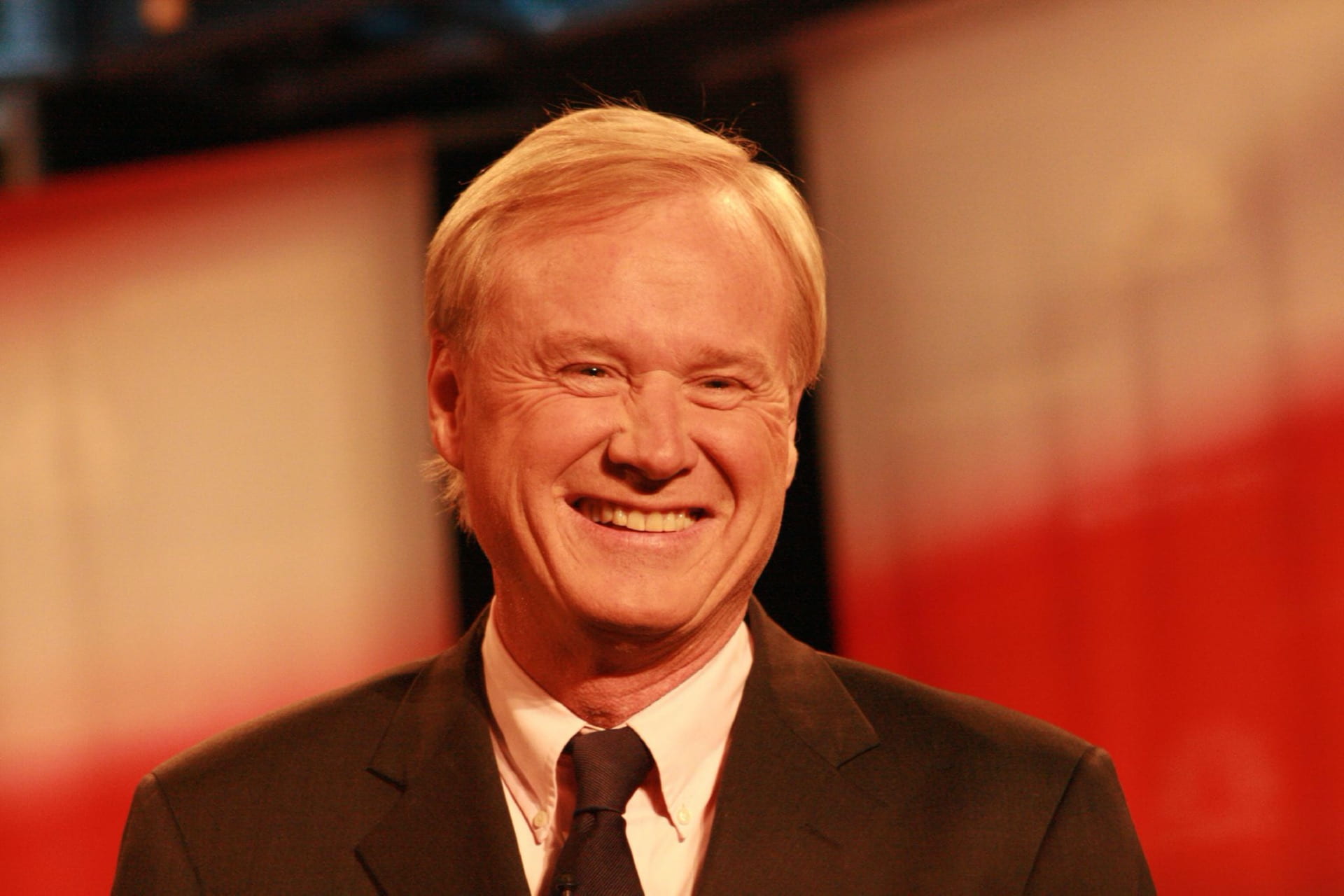
The term “fake news” is frequently used within the context of contemporary American politics. With heightened polarization, news programming often has an underlying bias running through an entire network’s shows. Political candidates often publicly denounce stories that portray them in a negative light. As a result, the public blindly follows charismatic figureheads instead of developing their own convictions. Without critical debate and ironic comedy to point out the flaws in the system in an engaging way, the media is on the path to becoming the most dangerous threat to American democracy.
Recently, Chris Matthews, the former host of MSNBC’s Hardball, was invited to speak on campus about his experiences in political communications. Even though his career may have ended, America needs a space for bipartisan debate and analysis. By inviting guests from both sides of the spectrum (sometimes at the same time), Matthews ensured that politicians were held accountable in a format accessible to the public. No one is perfect. Americans should not expect perfection, but they should expect politicians to be held accountable.
In addition to promoting bipartisan discussion, Matthews consistently challenged the politicians that appeared on his show. Lawmakers should not merely appear on television to talk about their successes. People watch certain news networks for affirmation of their preexisting beliefs. Instead, watching the news should allow Americans to question their convictions on crucial issues. Despite Matthews’ blunt approach, he forces individuals to critically assess their political thinking rather than only focusing on the positive.
While traditional discourse is imperative, there are moments when politics becomes overwhelming. In these cases, Americans need a comedic outlet. Saturday Night Live delivers with elaborate cold opens and its own “fake news” segment. The ridiculous and exaggerated nature of the sketches often helps to convey truths without the sophisticated understanding of politics that Hardball required at times.
For some, the comedic approach might easily point out immoral behavior that might not be obvious from formal news communications. With the anxiety and tension surrounding politics in America, the people might need a lighthearted approach. Even those less interested in politics can laugh along with SNL’s political satire. Once again, informal political criticism is accessible to Americans from the comfort of their homes.
No party is spared from bearing the brunt of an SNL joke. For decades, SNL has created presidential impersonations. Former President Donald Trump and President Joe Biden are certainly not the first to be mocked, nor will they be the last. Laughing about politics is beneficial, but one must be aware of where the truth begins.
Unlike social media, the essential features of sketch comedy help the public understand the nature of the performance. Actors resemble political figures, but no two people are identical. Of course, a comedy show should not replace news programming, but it can help point out the inconsistencies in American politics while keeping frustrated and disinterested audiences aware of current issues.
Americans need brutal honesty during the polarizing political climate. However, not everyone is responsive to the approach that Hardball employs, which creates space for political satire. One approach cannot satisfy the interests and needs of each individual. America needs everyone to stay informed on imperative issues by taking information from multiple sources. One TikTok or Tweet is not gospel.